Europe faced a flood of bomb threats that shook air travel but produced no bombs.
At a Glance
- Dozens of flights faced threats; none yielded explosives, and all landed safely.
- The British government called the incidents “malicious hoax threats”.
- Fighter jets, diversions, and bomb checks caused major disruption across Europe.
- Officials have not identified who sent the threats or tied them to a state.
Threats Trigger Action, Not Explosions
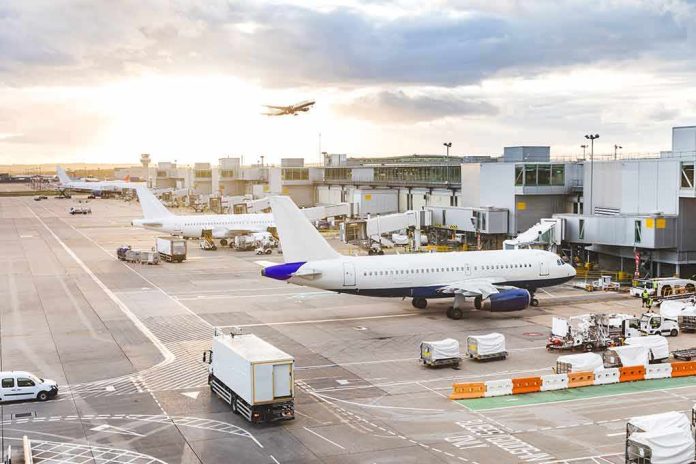
Airlines and governments moved fast as warnings hit flights bound for or within Europe. Pilots diverted to alternate airports. Crews followed checklists and prepared cabins for emergency landings. Bomb squads met aircraft and searched holds and cabins. Authorities reported no explosives found. All affected aircraft landed safely or completed inspections without incident. Finnair said two targeted flights received unfounded or hoax alerts, and both ended without harm. The pattern is heavy disruption without a discovered device.
Police and air forces did not treat the messages as pranks in the moment. Several flights received fighter escorts in French and other airspace. One Aer Lingus service from Dublin to Rome diverted to a French military base after a threat, where teams inspected the plane. National operations centers tightened coordination. Airport protection units swept gates and baggage areas. Bomb disposal experts cleared aircraft methodically. Officials did not report any suspicious items from the planes involved.
Why Hoax Waves Still Hurt
Aviation security runs on a simple rule: act first, sort later. A single missed device can be fatal. That logic forces diversions, escorts, and long searches even when a tip seems thin. The United Kingdom described the wave as “malicious hoax threats,” a term that signals both intent and effect: someone wanted to trigger fear and delay. This push-and-pull between safety and certainty taxes crews, passengers, and networks. Schedules break. Crews “time out.” Connections fail. The costs stack up fast.
False alarms are not rare in this domain. Research on airport screening shows that alarm-based systems often trade speed for sensitivity, which raises false positives. Analysts have found operational false alarm rates in hold baggage screening that can reach roughly 15 to 30 percent in real settings. That base rate means decision-makers expect many alarms to be harmless while still treating each as serious until cleared. In a tight system like air travel, these checks ripple into hours of downstream delay.
Who Did It, And Was It Coordinated?
Officials have not named a perpetrator. Authorities have not tied the messages to any state or group. The Associated Press stated that investigators had not attributed the threats to a government actor. The European Union’s transport commissioner urged caution on linkage, saying it was too early to say if the incidents were connected. Air France’s chief executive called the pattern unprecedented, yet that view is descriptive, not proof of a single campaign. Without arrests or digital forensics, claims of direction remain premature.
Reporters cited varying counts of affected flights, from “more than a dozen” to “at least 27,” which reflects the fog of rolling incidents across airspace and borders. That inconsistency frustrates the public but does not change the core facts: alerts came in waves, planes diverted, search teams cleared aircraft, and no devices turned up. A precise, shared tally would help future briefings, but the main outcome stands firm.
What Conservative Common Sense Sees
Security leaders must treat every threat as real, yet taxpayers deserve straight talk on results and cost. The British government’s “malicious hoax” framing aligns with public safety and accountability: protect first, then call the tactic what it is when checks find nothing. That clarity supports deterrence by naming abuse of emergency systems. It also guards against mission creep and fear-driven policy. Strong borders, clear rules, and fast consequence for abusers keep systems steady without giving chaos a win.
Airlines and airports should now publish clean after-action summaries. A consolidated incident log, with times, routes, diversions, and inspection outcomes, would steady public confidence and help crews train for the next round. Law enforcement should pool message fingerprints across borders to sort one campaign from copycats. That work does not slow planes today, but it saves time tomorrow. The lesson is simple: move fast under pressure, then tell the full story once the cabin is calm.
Sources:
townhall.com, abcnews.com, npr.org, cnbc.com, dawn.com, reuters.com, bbc.com, link.springer.com