France’s school protests jumped from campus blockades to a national stress test over classrooms, order, and political will.
Story Snapshot
- Students cite overcrowding, teacher gaps, and crumbling facilities as core grievances.
- Hundreds of schools saw disruptions or closures as the movement spread nationwide.
- The government acknowledged the scale and convened a crisis response.
- Officials blame a violent minority and outsiders for hijacking protests.
What lit the fuse: classrooms packed and buildings failing
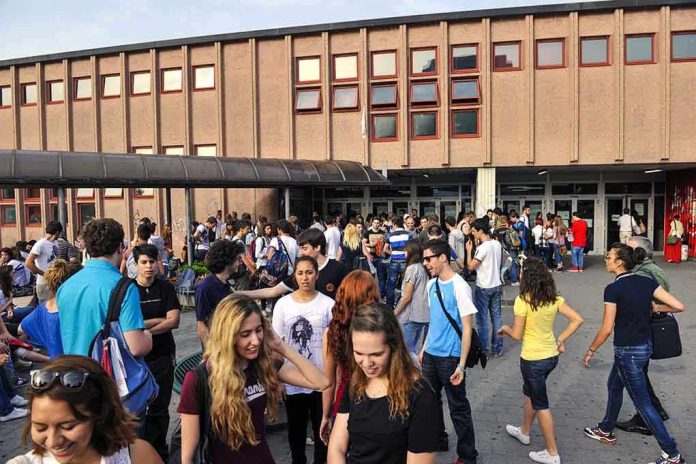
Students named the same problems across cities: too many classmates, too few teachers, and buildings that fail in summer heat. Reports described classes with 30 to 35 students, leaking halls, and rooms that turn stifling during heat waves. The complaints were not a niche gripe. Major outlets consistently listed the same top issues: large class sizes, absent teachers, worn facilities, and punishing schedules. That pattern points to a system strain, not a few noisy schools.
France’s own data lens adds texture. International snapshots show France’s teacher gaps vary by subject and region rather than a total collapse. Shortages hit some secondary tracks, especially math, but not every classroom equally. That nuance does not cancel the students’ lived reality. It explains why some lycées function while others struggle. When heat spikes and a math vacancy lingers, a class of 35 in an old wing becomes a spark.
How big it got: from scattered blockades to a national map
Education officials and reporters counted impacts across hundreds of schools in days. The Education Ministry first pointed to more than 330 high schools hit; later counts reached the mid-300s and then near 400 closures as the wave rolled on. Those numbers moved because the map moved. Fresh blockades formed as others cleared. Anyone who has tracked French school strikes knows this rhythm. Once momentum builds, copycat actions jump regions overnight.
The scale forced the state to treat it as more than teenage acting out. Prime Minister Sébastien Lecornu convened a crisis meeting while students demanded replacement teachers, better schedules, and fixes to buildings that leak and overheat. The timing collided with broader public-sector strikes and budget fights, which raised the stakes in the streets and in parliament. When schools become the stage for fiscal politics, tempers rise and patience thins.
Order vs. outrage: the security turn and its risk
Officials said the situation shifted from protest to a public order disturbance. They cited fires, thrown objects, and injuries to make the case for a stronger response. Justice Minister Gérald Darmanin called it the work of an “active and violent minority” and warned that outsiders had hijacked some marches. Police detained hundreds as prefects were told to stop violence quickly to secure schools and public spaces. That is the state’s duty when buses burn or heads are cracked.
Student riots continue to sweep through French towns and cities over rows about teaching conditions.
Demonstrators have been seen lighting fires, hurling objects at law enforcement officers, and causing widespread disruption, with fire trucks and buses set alight in some areas.… pic.twitter.com/MA6IaDJ324
— CGTN Europe (@CGTNEurope) October 2, 2026
Here is the hard part. A tight law-and-order line can calm streets, but it can also harden a movement if root causes go unaddressed. Students asked for smaller classes, stable teachers, and safe buildings. Those are practical goals. The conservative instinct says fix the basics first: put adults in classrooms, cap headcounts, and repair what is broken. If officials deliver credible steps on staffing and heat-mitigation now, the spark that fed the violence loses oxygen.
What would actually fix this: three concrete moves
First, surge certified substitutes into the worst-hit lycées for core subjects. Target math, science, and language tracks where vacancies compound other stress. Second, set emergency class-size caps for heat months, with portable rooms or split schedules in old buildings. Students complaining of 35 bodies in 95-degree heat are not making a culture-war point; they are describing a hazard. Third, fast-track maintenance: fix leaks, ventilation, and shade before exams. Visible repairs earn trust faster than speeches.
Budget fights complicate all three. But a short-term stabilization fund for teacher coverage and building triage costs less than a season of rolling closures. A clear dashboard that shows where vacancies fell and which roofs were fixed would also cool tempers. Data does not swing a baton. It shows progress. When young people see adults move resources to match words, they usually move back to class. When they see delay, they head back to the gates.
The bottom line: restore calm by restoring basics
France can condemn violence and still meet fair demands at the same time. President Emmanuel Macron rejected violence and said the government would address youth concerns concretely, while ministers stressed a need to restore order. Both aims matter. Order without solutions breeds repeat crises. Solutions without order reward chaos. The path through is simple, not easy: protect schools today, and reduce class loads, fill posts, and repair buildings tomorrow. Do that, and this wave recedes.
Sources:
pjmedia.com, reuters.com, aljazeera.com, euronews.com, cp24.com, dw.com, lemonde.fr