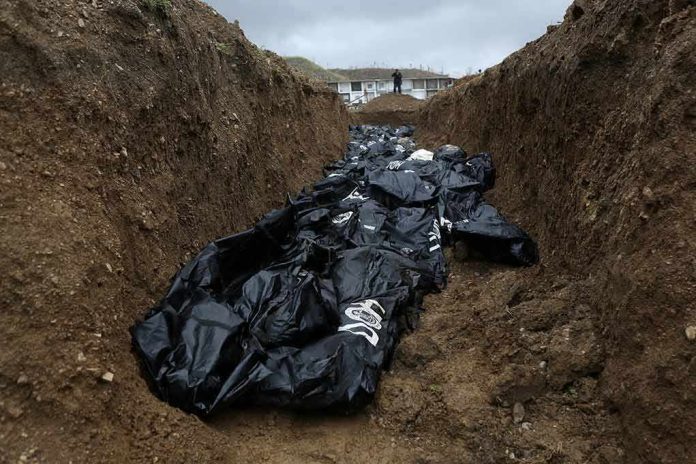
Gaza City held a mass funeral for about 100 people recovered from rubble in the Zeitoun neighborhood, closing a three-year wait to lay them to rest.
Story Snapshot
- Funeral honored roughly 100 people recovered from destroyed homes in Zeitoun.
- Crews worked with the International Committee of the Red Cross to retrieve remains.
- Mourners prayed and buried the dead at local cemeteries in Gaza City.
- Some reports say many of the dead were children, underscoring the human toll.
What happened on the ground in Zeitoun
Mourners carried bodies and remains through Gaza City’s Zeitoun neighborhood and performed funeral prayers before burial. Reports describe about 100 people laid to rest, with some outlets listing 100 and others citing totals in the low hundreds. Several families were named among the dead. Local authorities tied the deaths to Israeli strikes on residential homes during the early months of the war. The funeral marked the point when families could finally hold rites after years of waiting.
Civil defense teams and local crews led the recovery work in recent days as part of an ongoing project to retrieve people still buried beneath collapsed buildings. The effort involved heavy machinery and coordination with the International Committee of the Red Cross. The remains were then prepared for burial in Zeitoun cemeteries after memorial addresses from Gaza’s Civil Defence and community figures. The focus stayed on returning the dead to their families with dignity and care.
Where and how the burials took place
Funeral prayers took place in Gaza City, followed by burials at cemeteries in the Zeitoun area. Reports mention Al-Ahli cemetery and Martyrs Cemetery as burial sites used for the procession. The ceremony moved in stages: gathering, prayers, memorial words, then interment. The structure reflected both religious practice and a civil need to process a large number of dead at once. The burial teams managed logistics shaped by a city still clearing debris and grief at the same time.
Outlets covering the event noted the scale and the strain on families. One report stated that the recovered group included a high number of children, which shaped the public mood and the coverage. Other outlets centered on the wait since the strikes, the names of families involved, and the dignity of finally finding and burying loved ones. The shared thread was closure after delay, even if formal identification could not meet textbook standards in every case.
Why numbers vary and why the core story holds
Different outlets reported totals such as 100, 105, or 112. This spread is common in conflict recovery, where teams pull remains from layered rubble across days, and where some remains are partial. The variance does not undercut the funeral’s core facts. It reflects the hard math of recovery in a war zone. The broader record on Gaza shows that delayed recovery and incomplete identification often produce shifting counts that settle only after multiple rounds of documentation.
Palestinians in Gaza held a mass funeral for 105 people whose remains were recovered from beneath the rubble of the Al-Taj residential block nearly three years after they were killed. pic.twitter.com/D26vyxd82j
— Al-Estiklal English (@alestiklalen) October 1, 2026
American common sense sees two truths here. First, families deserve to bury their dead with names, prayers, and peace. Second, responsible record-keeping matters because it protects the living from rumor and the dead from being lost in numbers. The International Committee of the Red Cross urges careful recovery, documentation, and identification before burial when possible. That is the right lodestar. In Gaza, crews worked toward that aim under harsh limits and still brought loved ones home.
Sources:
youtube.com, aljazeera.com, npr.org, nbcnews.com, lusa.pt, english.wafa.ps, bbc.com