A defense lawyer says he holds a 32-name dossier tying past officials to drug trafficking—and he plans to hand it to the United States this month.
Story Snapshot
- The lawyer for Joaquín “El Chapo” Guzmán says he will deliver a 32-name file to U.S. authorities.
- He claims photos, videos, and other evidence exist in Mexican offices but remain unseen by the public.
- He reports threats and intimidation tied to his work, which he blames on powerful actors.
- No names or documents have been shown publicly, so all claims remain unverified.
The Lawyer’s Pledge And What It Would Mean
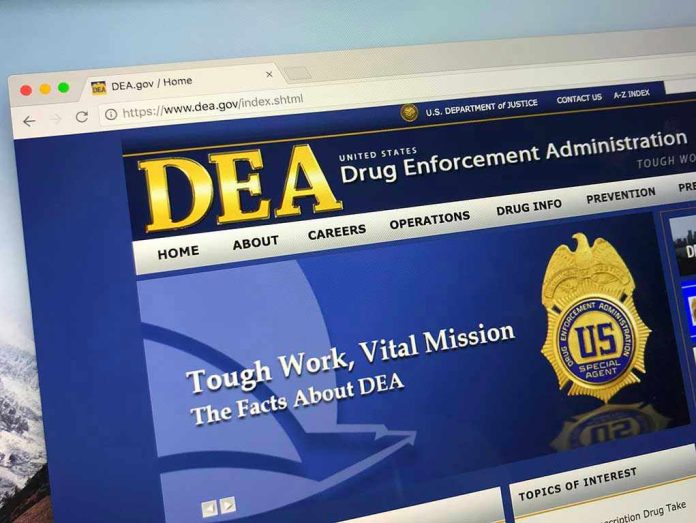
Gerardo Rincón Flores, a Mexican attorney linked to Joaquín “El Chapo” Guzmán, says he will send a dossier naming 32 officials to the United States Department of Justice or the Drug Enforcement Administration. He says it details ties to drug networks that span past administrations. He also says six people named have already denied involvement after hearing of the list. He offers no public documents yet. He says he can authenticate letters tied to Guzmán by handwriting and signature.
“🔴 Lawyer for “El Chapo” Claims He Will Deliver to US File on 32 Officials Linked to Narco
Lawyer Gerardo Rincón Flores stated that he will deliver to United States authorities a file with information on 32 officials who, according to him, would be linked to drug trafficking.… https://t.co/jkw8vIYKnM
— ✈️SHAWN🇺🇸 (@shawnurban3) July 5, 2026
Rincón Flores also says photos, videos, and related files sit in the Nuevo León prosecutor’s office and with Mexico’s president, though none have surfaced in public court filings. He says he faces threats, including kidnapping and assaults, which he links to the Attorney General’s Office. These are sharp claims. They demand proof, chain of custody, and forensic review. None of that has been shown to the public yet, which keeps the story in a fog of allegation.
The Evidence Gap That Keeps The Door Open
No one outside the lawyer’s circle has seen the 32 names or the supposed proof. No filing sits on a public docket. No press conference laid out bank records, travel logs, or sworn testimony. Independent outlets report the pledge but not the paperwork. That is why skepticism rises. Media caution is fair when the record is thin. Until names and documents are filed and tested, the case is a promise, not a proof set.
Some leaders have flatly denied cartel ties in similar episodes. Rubén Rocha Moya, governor of Sinaloa, called such claims a “perverse strategy” against Mexico’s constitutional order. He posted that denial publicly in April 2026. Former presidents Enrique Peña Nieto and Felipe Calderón denied cartel payments after past bribery claims surfaced years ago. Those are clear denials, but they are not audits of the new dossier. They answer a charge; they do not inspect evidence that we still cannot see.
The “Narcotestimony” Cycle In Mexico
Mexico has seen this loop before. An insider or lawyer hints at a bombshell list. The list arrives late or never. Institutions go quiet. The case fades, and public trust drops another notch. Researchers call out how corruption and impunity lock arms and stall accountability. The pattern repeats because claims rarely come with the “grand corruption” trail—contracts, bank wires, emails, and witnesses under oath—that can crack open a system built to resist change.
Gerardo Rincón Flores, the Mexican lawyer representing Joaquín "El Chapo" Guzmán, former leader of the Sinaloa Cartel, has announced he will send U.S. authorities a dossier naming at least 32 Mexican government officials allegedly linked to drug trafficking. The list reportedly… pic.twitter.com/m8oIDjjXhz
— Cartel Watch (@CartelWatchNet) July 5, 2026
That pattern does not prove this new dossier is false. It only shows what proof must look like to break through. For conservatives who value the rule of law and equal justice, the path is simple: put facts on paper, under oath, with verifiable chains of custody. Then test them in court. If the lawyer has logs from visits by United States criminal lawyer María Colón, prison records can confirm dates and calls. If the Nuevo León office holds media files, disclosure laws can shake them loose for forensic checks.
The Next Honest Steps
Here is what would turn heat into light. First, deliver the full dossier to the United States Department of Justice or the Drug Enforcement Administration and confirm receipt. Second, file a sworn declaration from Guzmán that lays out names, dates, payments, and roles with testable detail. Third, seek a court order to preserve and produce the alleged photos and videos from Nuevo León, then run a third-party forensic audit. Fourth, log and report the threats to human rights groups and request protective measures with case numbers.
If those steps happen, Congress and courts in both countries can act. If they do not, this stays in the realm of talk shows and rumor mills. Americans know that cartels thrive when officials look away. They also know due process protects the innocent and punishes the guilty. That is not a partisan view. It is basic fairness. Bring the receipts, or stop the drip-drip of claims that wound trust without curing corruption.
Sources:
borderlandbeat.com, infobae.com, x.com, youtube.com, facebook.com, instagram.com