Islamist terrorists reportedly turned a village football match into a mass killing—underscoring how quickly religious minorities can become targets when the state can’t secure basic public safety.
Story Snapshot
- ISWAP claimed responsibility for killing at least 29 people in an attack on a Christian community in Sabon-Gari village, Adamawa State, on April 26, 2026.
- The same week included another major strike on April 21 in Kubako village, where 12 Christians were killed and a church was burned, plus the killing of a church minister in Zinai.
- Reports describe attackers surrounding communities and firing on civilians, while ISWAP propaganda framed victims as “Christian combatants.”
- Governor Ahmadu Umaru Fintiri visited the area and said security measures would be increased, but details on deployments and strategy remain limited.
Attack on Sabon-Gari Shows a Strategy of Maximum Civilian Fear
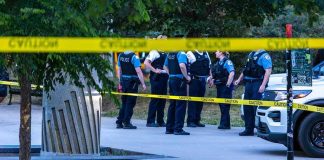
Gunmen tied to the Islamic State West Africa Province (ISWAP) claimed they killed at least 29 people in Sabon-Gari village in Adamawa State on Sunday, April 26, 2026, according to reporting that includes local accounts and the group’s own claim. The attack hit during a football match—an ordinary community gathering—suggesting an intent to spread fear beyond church services and formal religious events. Reports also noted missing persons in the aftermath.
Accounts from the ground described a coordinated assault rather than a chaotic outburst. One report said attackers split into two groups to encircle the village before shooting, a tactic that can trap civilians and complicate escape routes. ISWAP’s statement claimed the group killed “at least 25” Christians and portrayed the violence as a military-style operation. Local reporting, however, described indiscriminate fire at players and spectators—civilians whose only “crime” was showing up.
Multiple Strikes in Five Days Point to Operational Reach in Adamawa
The Sabon-Gari massacre did not occur in isolation. On April 21, 2026, reports said ISWAP attacked the Christian village of Kubako in Adamawa, killing 12 Christians and burning a church. That same day, suspected Islamists killed Emmanuel Ezeokwe, identified as a church minister, in Zinai village. Taken together, the timeline shows a cluster of attacks in a narrow window—evidence that militants can still move, coordinate, and choose targets in areas where government control is described as limited.
Adamawa’s geography also matters. Reporting highlighted that Kubako sits near the boundary with Borno State, long described as an ISWAP stronghold. That proximity can create a corridor for raids, retreats, and resupply—especially when local security forces are thin or slow to respond. Even when authorities pledge action, residents often make decisions based on what they see on the ground. In this case, reports said many families abandoned their homes after the attacks, fearing the next strike.
Property Destruction Adds Economic Punishment to the Terror Campaign
Beyond the death toll, reporting described deliberate destruction of community assets. ISWAP claimed it torched a church and destroyed nearly 100 motorcycles, while ground reporting cited 42 motorcycles burned. Either figure represents a major blow in rural areas where motorcycles often function as work tools, transport, and informal “lifelines” connecting families to markets, clinics, and neighboring villages. Destroying them can deepen dependency, reduce mobility, and accelerate displacement—exactly the kind of long-term instability terror groups exploit.
Government Promises More Security, But the Public Still Sees a Vacuum
Adamawa Governor Ahmadu Umaru Fintiri visited the attack site on April 27 and called the assault an “affront to our humanity,” saying security measures would be increased. That acknowledgment matters, but available reporting offered few specifics about force posture, patrol patterns, or sustained protection for outlying villages. When details are scarce, public confidence tends to weaken—fueling the perception, shared by many across the political spectrum, that ordinary families are left to fend for themselves while institutions react after the fact.
Will this ever get the same attention the Oct 7th attacks did? ISWAP Gunmen Kill 29 Christians in Nigeria in One of Several Attacks This Week https://t.co/IP1wuzIGAc #gatewaypundit via @gatewaypundit
— Qdaho (@BascoFrom) April 30, 2026
The broader significance extends beyond Nigeria’s borders. Analysts and church leaders have pointed to a long pattern of violence against Christians in northern and Middle Belt Nigeria, with some describing it as “genocide.” An APPG-cited assessment referenced in reporting said armed groups demonstrate intent to target Christians and symbols of Christian identity—such as churches—suggesting strategic selection of targets. When extremists can kill, burn, and vanish repeatedly, the lesson for any society is sobering: security failures don’t stay local, and the cost is paid first by civilians.
Sources:
At least 29 killed by Islamists in Adamawa state Christian community, Nig
Twelve Christians killed by Islamic State in north-eastern Nigeria
Gunmen in Nigeria kill 28 people in predominantly Christian area