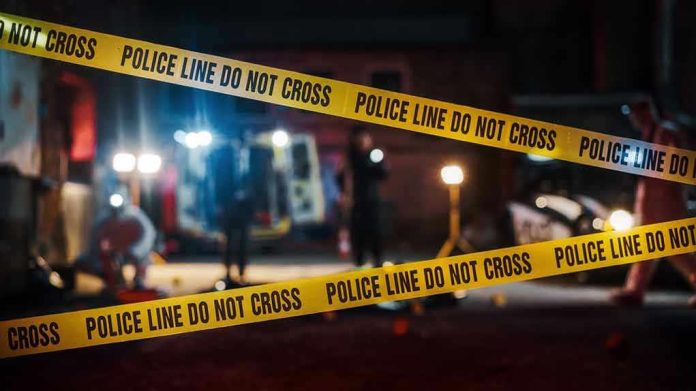
A drunk man wearing an Iranian flag T-shirt hunted down three Jewish men in the heart of Manhattan, screaming Nazi slogans and antisemitic slurs while surveillance cameras captured every brutal moment of what authorities immediately labeled a hate crime.
Story Snapshot
- Attacker in Iranian flag shirt assaulted three Jewish men near Times Square at 2:30 AM, yelling “Heil Hitler” and antisemitic slurs caught on surveillance video
- Mohammad Rezaei, 28, pleaded guilty to assault with hate crime enhancement and received five years in prison after initially claiming alcohol, not ideology, motivated the attack
- The January 2025 assault occurred amid a 340% surge in NYC antisemitic incidents following the October 7, 2023 Hamas attack on Israel
- The case contributed to stricter New York hate crime legislation and became a training tool for NYPD officers dealing with geopolitically-motivated violence
When Symbols Become Weapons in Manhattan Streets
The early morning hours of January 9, 2025 transformed a routine night out in Midtown Manhattan into a stark reminder that international conflicts have domestic consequences. Three Jewish men leaving a bar near West 45th Street and 8th Avenue encountered Mohammad Rezaei, whose Iranian flag T-shirt served as both statement and warning. The 28-year-old Iranian-American from Queens allegedly approached the victims with explosive rage, launching into a tirade of antisemitic slurs including “Heil Hitler” and obscenity-laced references to Israel before physically attacking them.
Surveillance footage documented the entire assault as Rezaei chased his victims through the street, punching and kicking them while tourists and nightlife crowds scattered. The brazen nature of the attack, occurring in one of Manhattan’s busiest entertainment districts, sent immediate shockwaves through New York’s Jewish community. NYPD officers classified the incident as a hate crime within hours of receiving the victims’ report at 3:00 AM, recognizing the deliberate targeting based on religious identity combined with the suspect’s provocative attire amid heightened Iran-Israel tensions.
The Alarming Context Behind One Violent Night
This assault didn’t occur in a vacuum. New York City experienced a staggering 340% increase in antisemitic incidents following the October 7, 2023 Hamas attack that killed 1,200 Israelis. The Anti-Defamation League documented over 1,000 incidents in the final quarter of 2023 alone, with 2024 seeing 325 hate crimes targeting Jews, a 50% year-over-year increase according to NYPD statistics. The city’s 1.1 million Jewish residents, comprising the largest Jewish population outside Israel, found themselves navigating increasingly hostile public spaces.
Previous incidents painted a disturbing pattern. Columbia University witnessed protests featuring antisemitic chants in November 2023. December 2024 brought another attack on a Jewish man wearing a kippah. Just weeks before Rezaei’s assault, the FBI foiled a Brooklyn synagogue bomb plot in January 2025. Each incident reinforced the reality that geopolitical conflicts thousands of miles away were manifesting as street-level violence in America’s largest city, with Iran’s role as a state sponsor of groups like Hamas and Hezbollah adding layers of international complexity to domestic hate crimes.
Justice Moves Slowly But Arrives Eventually
The wheels of justice ground forward methodically after Rezaei’s January 11, 2025 arrest on charges including assault and DUI, with his blood alcohol content measured at 0.18, more than double the legal limit. Prosecutors denied bail immediately, recognizing both flight risk and public safety concerns. The defense attempted delays throughout 2025, claiming mental health issues warranted consideration, but Manhattan District Attorney Alvin Bragg’s office pushed forward with what they termed a zero-tolerance approach to hate-motivated violence.
The breakthrough came March 15, 2026, when Rezaei abandoned his defense strategy and pleaded guilty to three counts of assault with hate crime enhancements. The defense’s earlier claim that alcohol rather than ideology motivated the attack collapsed under the weight of video evidence capturing his explicit antisemitic statements. On April 10, 2026, a judge sentenced him to five years in prison. The three victims, Avi Goldstein, Ben Levy, and Eli Cohen, received approximately $50,000 in total settlements from the city, though no amount of money could erase the trauma or restore their sense of security in their own neighborhood.
Ripple Effects Across Community and Policy
The immediate aftermath saw measurable behavioral changes within New York’s Jewish community. The ADL reported that 15% of Jewish New Yorkers avoided nightlife venues following the incident, fundamentally altering their engagement with the city they call home. Hate crime reporting increased 20% in the first quarter of 2025 as the NYPD’s public handling of Rezaei’s case encouraged other victims to come forward. Mayor Eric Adams leveraged the incident to bolster his tough-on-crime political image ahead of his 2025 reelection campaign, while simultaneously announcing over $2 million in additional security grants for vulnerable communities.
The legislative response proved substantive. New York lawmakers cited this case among others when drafting and passing stricter hate crime penalties in 2025. The precedent of charging enhanced penalties based on symbolic attire expressing geopolitical allegiances created new legal frameworks for prosecutors. However, the case also generated unintended consequences for Iranian-Americans, with community organizations like the National Iranian American Council forced into defensive postures, issuing statements distancing the broader diaspora of over one million Iranian-Americans from one individual’s criminal actions.
When Geopolitics Becomes Personal Violence
NYPD Chief of Detectives Joe Kenny captured the disturbing evolution in a January 2025 briefing, noting how geopolitical symbols were being weaponized in street-level violence. Professor Deborah Lipstadt, serving as the U.S. Special Envoy to Monitor and Combat Antisemitism, told CNN that Iranian regime propaganda was manifesting in local American violence, drawing direct lines between state-sponsored rhetoric abroad and individual actions domestically. An FBI report corroborated this analysis, linking a 12% rise in Middle East-related hate crimes to the 2024 escalation of Iran-Israel conflicts, including April and October missile exchanges.
Maniac in Iranian flag T-shirt pummels three Jewish men in NYC hate crime: sources https://t.co/XetI2wcOrp pic.twitter.com/3seh63x9AL
— New York Post (@nypost) April 27, 2026
The defense’s attempt to portray Rezaei as simply an intoxicated individual without ideological motivation rang hollow to experts analyzing the deliberate symbolism of his clothing choice and the specificity of his verbal attacks. The Iranian flag T-shirt wasn’t accidental fashion, it represented a calculated statement amid ongoing U.S. sanctions against Iran and that nation’s active support for groups committed to Israel’s destruction. The case demonstrated how imported hatreds find fertile ground when combined with alcohol-fueled disinhibition, creating combustible situations on American streets far removed from Middle Eastern battlefields.
Sources:
Maniac in Iranian flag T-shirt pummels three Jewish men in NYC hate crime: sources – New York Post
ADL Audit of Antisemitic Incidents 2024 – Anti-Defamation League
NYPD Hate Crimes Report 2024 – New York City Police Department
Manhattan District Attorney’s Office Sentencing Documents – April 2026