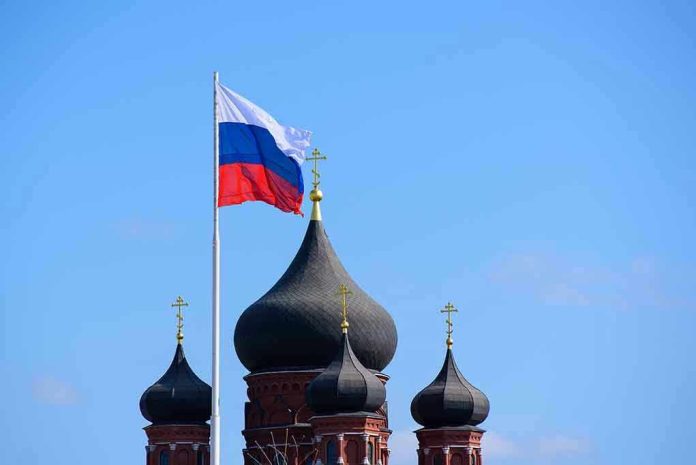
Russian intelligence grooms Ukrainian children as young as 11 to bomb their own schools and shoot classmates, turning desperate teens into disposable weapons in a shadow war.
Story Snapshot
- April 23, 2026: SBU thwarts two school attacks by recruited minors in Kirovohrad and Odesa oblasts.
- Over 600 crimes by Ukrainian children for Russia in one year; 25% of 1,000+ sabotage suspects under 18.
- FSB uses Telegram channel “ETERSSA” and TikTok for recruitment, escalating from arson to suicide bombings.
- Financial incentives drive vulnerable youth from poor families; psychological manipulation hides true intent.
- Minors face 10-year prison terms yet qualify as war crime victims under international law.
School Attacks Foiled in Kirovohrad and Odesa
Ukrainian Security Service prevented two school attacks on April 23, 2026. A 15-year-old in Kirovohrad assembled an explosive device for detonation during break, planning to follow with firearms and knives. Authorities charged him with terrorism preparation, facing up to 10 years imprisonment. An 11-year-old in Odesa reached recruitment but received no weapons. SBU identified Telegram channel “ETERSSA” as the recruitment hub targeting minors.
FSB Recruitment Campaign Evolution
FSB launched recruitment in spring 2025 with arson on cars and railway electricity hubs. Handlers upgraded to burning military recruitment centers by mid-2025. Early 2026 saw shift to suicide bombings using Ukrainians. Professional psychologists craft manipulation so refined adults miss red flags. Tasks frame as “just goals” or family protection, exploiting psychological vulnerabilities in unsupervised youth.
National Police report over 600 child-committed crimes for Russian services last year. SBU tallied 1,000 sabotage suspects since 2022, 25% minors. Recruiters target disadvantaged single-parent families facing hardship. Financial payments—$1,000 per bombing, up to $7,000 with surveillance—drive most, not ideology. Kharkiv cases confirm only one pro-Russian minor.
Graduated Manipulation Targets Vulnerable Teens
Recruitment follows precise escalation. Initial social media contact offers cash for leaflets, graffiti, photos. Tasks intensify to arson, explosives, facility surveillance. Final phase demands suicide or mass attacks. A March 2024 Ternopil case saw 14-year-old girl blackmailed with hacked photos for bomb-making. Late February 2025 brought three police explosions in 48 hours by teens.
These tactics align with Russia’s “Diversion Noise” plan from 2023, Putin-sanctioned hybrid warfare since 2022 invasion. Social media like Telegram and TikTok enable undetected access to isolated youth. Ukrainian police seize devices, firearms, explosives from suspects. Ongoing probes stretch SBU resources amid hundreds of cases.
Legal and Societal Fallout
Minors hold criminal responsibility under Ukrainian law but international protocols deem under-15s war crime victims, extended to 18 in some cases. Courts balance prosecution and rehabilitation, eroding community trust as neighbors turn saboteurs. Schools heighten security; parents fear daily. Disadvantaged areas suffer most, with generational trauma looming for manipulated youth.
Hybrid warfare diverts Ukraine’s focus inward while battles rage externally. Common sense demands swift justice for recruiters—facts show FSB’s deliberate cruelty exploiting poverty violates every moral code conservatives cherish, like family protection and national sovereignty. Long-term, Ukraine needs precedents shielding true victims while deterring enemies.
Sources:
Russia recruited Ukrainian teenagers to blow up schools, shoot classmates, SBU says
Ukrainian teens are committing acts of betrayal. How should they be judged?
FSB Recruits Ukrainian Teenagers for Espionage and Sabotage – FT
Ukraine’s teen saboteurs: Groomed by Russia to target their homeland
Ukrainian teens are committing acts of betrayal. How should they be judged?