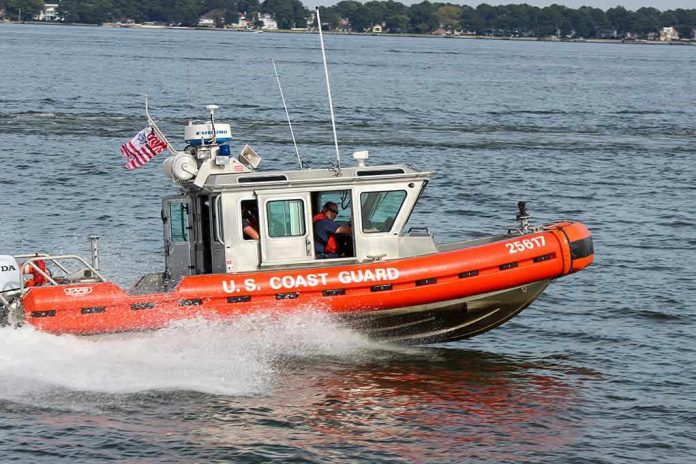
A pod of wild dolphins didn’t just swim near a Florida police boat—they fell into formation like they had a job to do.
Story Snapshot
- Sarasota-area marine officers captured video of dolphins pacing and “escorting” their marked patrol boat during routine duty.
- The behavior fits a well-known dolphin habit: riding a boat’s wake to move efficiently and playfully investigate noise and motion.
- The viral framing (“follow” versus “chase”) changes the vibe, but the observed actions read as curiosity, not conflict.
- These clips boost public morale and police-community warmth, while also reminding boaters that dolphins are still wild animals.
A Routine Patrol Turns Into a Viral Escort
Sarasota’s marine patrol officers weren’t staging a publicity stunt; they were doing normal waterway work when the dolphins appeared and stayed with the boat. The police department shared the moment with a light touch—an “escort” that made the job look a little less like enforcement and a little more like living inside a nature documentary. That tone matters, because it frames the encounter as welcome company, not an animal “incident.”
The public loves these scenes for the obvious reason: dolphins look like joy. For readers who’ve watched modern life get noisier and meaner, the clip offers a clean, wordless message—something good can happen on an ordinary day, even while people are doing serious work. That doesn’t make it sentimental fluff. It’s a tiny case study in how social media has become a second “beat” for law enforcement: patrol the water, then patrol the public mood.
Why Dolphins “Follow” Boats: Wake, Noise, and Curiosity
Bottlenose dolphins commonly bow-ride and wake-ride. The physics is simple and unromantic: a moving boat creates pressure waves that can help dolphins travel with less effort, like a cyclist drafting behind a truck. Add the sound signature of an engine and the turbulence that can kick up bait fish, and a patrol boat becomes a moving point of interest. “Following” can be play, travel efficiency, or opportunistic foraging.
Sarasota Bay’s resident dolphins have another reason to act bold: familiarity. In busy recreational waters, dolphins hear engines constantly and often learn predictable patterns around boats. That familiarity doesn’t mean they’re tame, trained, or seeking human friendship. It means they’ve adapted to traffic the way city birds adapt to sidewalks. The danger for humans is misreading that comfort as consent to get closer, feed them, or treat them like props.
The “Chase” Headline Versus What the Video Suggests
Media headlines sometimes use “chase” because it adds drama without technically lying; the dolphins do move behind or alongside the boat. Common sense still applies: a chase implies pursuit with intent to catch, threaten, or force an outcome. Dolphins pacing a wake, surfacing rhythmically, and staying comfortably near a vessel aligns better with escorting behavior than aggression. The story’s own uncertainty—no date, no officer names, no count—also signals this wasn’t a major incident report.
Readers over 40 have seen this movie before: language shapes reaction. Call it “chase” and people imagine danger, speed, and heroics. Call it “escort” and people imagine harmony and charm. The conservative, reality-based way to hold both ideas is simple: enjoy the moment, but don’t let a feel-good framing replace rules and restraint. Wild animals don’t become mascots because a clip went viral; they remain unpredictable, powerful, and protected.
What Marine Patrols Actually Do While Dolphins Steal the Show
Marine units exist for practical reasons: boating safety, response to distress calls, enforcement of local rules, and protection of waterways that draw heavy recreation. That work rarely trends online, yet it matters to anyone who cares about order, accountability, and public safety. A dolphin escort is the soft side of a hard job, and it can improve the public’s willingness to see officers as neighbors rather than abstractions—without requiring a politicized lecture or a manufactured controversy.
That said, the “lighter moment” doesn’t erase the core mission. Florida waters can turn dangerous fast, especially with inexperienced boaters, alcohol, and crowded channels. Marine patrol officers operate in a space where small mistakes become fatalities. The viral clip functions as a reminder that these officers work where people vacation—and that they do it under the same scrutiny as land-based policing, now amplified by phones, shares, and comment sections.
The Real Lesson: Enjoy the Wonder, Keep the Distance
Dolphins feel like friendly neighbors because they’re expressive and intelligent, but the most responsible response is respectful space. Wildlife agencies routinely warn against feeding or trying to touch dolphins; human contact can change their behavior, increase injury risk from propellers, and create dependency patterns that don’t end well. The best “escort” etiquette is passive: slow down if needed, avoid sudden turns, never corner them, and let them choose the distance.
The clip’s appeal also carries a subtle caution for communities like Sarasota: these waters are shared space. Tourism, policing, and wildlife all occupy the same lanes. The conservative instinct to steward what you have—protect your home, respect property lines, keep order—fits perfectly here. Dolphins belong to the ecosystem, not to the audience. The win is seeing them thrive without turning the moment into interference disguised as affection.
The dolphin “escort” may fade from the feed, but it leaves a useful afterimage: even in an era obsessed with conflict, a routine patrol can still reveal a coastline worth protecting—and a public still hungry for simple, real-world awe.
Sources:
WATCH: Dolphins follow Florida police boat