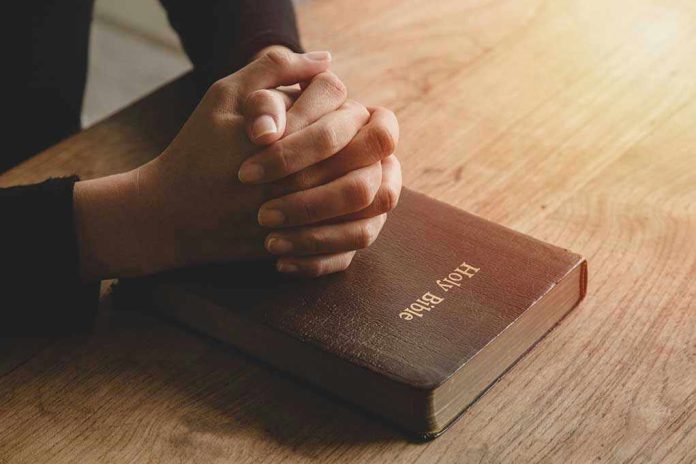
A Christian woman’s right to silently pray is being criminalized in the UK, raising significant concerns over freedom of thought and expression.
Story Highlights
- Isabel Vaughan-Spruce charged for silent prayer outside UK abortion clinic
- First person prosecuted under new national buffer zone law
- Law aims to prevent influence within 150m of clinics, but critics argue it infringes on civil liberties
- Case highlights tension between abortion access protections and freedom of expression
First Prosecution Under New Law
Isabel Vaughan-Spruce, a 48-year-old Catholic and pro-life campaigner, has been criminally charged by West Midlands Police and the Crown Prosecution Service (CPS) for silently praying outside the BPAS Robert Clinic in Birmingham. This marks the first prosecution under the national buffer zone provisions of the Public Order Act 2023, which came into force in October 2024. The law criminalizes any intentional or reckless influence within 150 meters of abortion clinics.
The charges follow Vaughan-Spruce’s silent prayer sessions within the restricted area, alleged to have occurred on several occasions since January 2025. This case is pivotal as it tests the boundaries of the new law, which aims to protect women accessing abortion services from harassment but raises questions about the extent to which silent prayer can be deemed influential.
Legal and Political Ramifications
The case has garnered significant attention as it sets a precedent for how national buffer zones will be enforced. The CPS’s decision to charge Vaughan-Spruce contradicts its own guidance that silent prayer alone does not meet the criminal threshold unless accompanied by overt acts. The upcoming court proceedings in January 2026 will potentially set a national precedent, impacting how freedom of thought and expression are interpreted under British law.
Pro-life and religious liberty advocates argue that such enforcement represents a form of “thoughtcrime,” infringing on basic freedoms. Vaughan-Spruce has previously been acquitted of similar charges when local Public Spaces Protection Orders were in place, and she received compensation for wrongful arrests.
Broader Implications for Civil Liberties
This case underscores a broader tension between state enforcement and individual rights. The enforcement of buffer zones in the UK has sparked debate over the balance between ensuring safe access to abortion services and upholding civil liberties. Critics of the buffer zones argue that they suppress peaceful expression and prayer, fundamental rights protected under the European Convention on Human Rights.
The continued legal challenges faced by Vaughan-Spruce highlight the contentious nature of abortion-related legislation and its implications for freedom of expression in public spaces. As the legal proceedings unfold, they are likely to influence public discourse and policy around buffer zones and civil liberties in the UK.