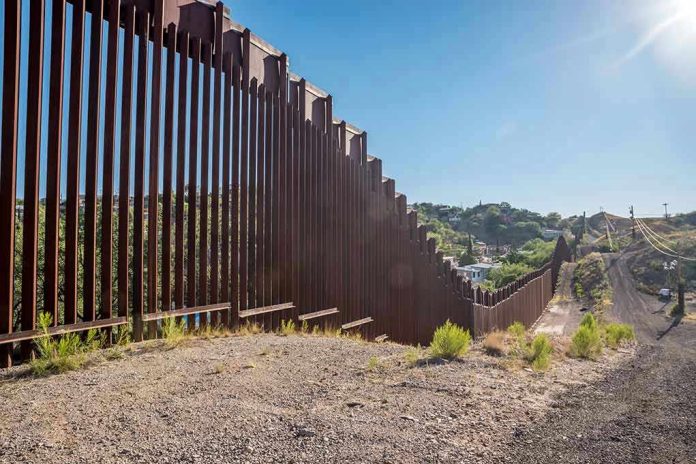
The Trump administration transforms California’s southern border into a militarized zone, signaling the most aggressive immigration enforcement strategy in decades.
Story Overview
- New militarized zone established along California-Mexico border
- Department of Interior announces expanded enforcement operations
- Part of broader crackdown on unauthorized border crossings
- Represents escalation of Trump’s immigration enforcement strategy
Border Security Takes Center Stage
The Department of Interior’s announcement marks a significant escalation in border enforcement tactics along one of America’s most porous entry points. California’s vast border with Mexico has long served as a primary corridor for unauthorized crossings, making it a strategic focal point for enhanced security measures. This militarized approach represents a departure from traditional border patrol methods, incorporating military-style operations and resources.
Trump administration setting up another militarized zone on California-Mexico border https://t.co/5CcfC3xIK4
— Ryan Mancini (@ManciniRA) December 11, 2025
Strategic Implementation of Enhanced Enforcement
The establishment of this militarized zone reflects careful strategic planning aimed at deterring illegal immigration through show of force. Military-style operations along the border send a clear message to potential border crossers about America’s commitment to enforcing immigration law. The Department of Interior’s involvement suggests coordination between multiple federal agencies, creating a comprehensive enforcement network that extends beyond traditional Border Patrol capabilities.
This approach aligns with fundamental principles of national sovereignty and rule of law. Countries maintain borders for legitimate reasons, including national security, economic stability, and orderly immigration processes. The militarized zone concept acknowledges that conventional enforcement methods have proven insufficient against organized smuggling operations and mass migration events.
California Border Challenges Drive Federal Response
California’s border presents unique enforcement challenges due to its geography, urban areas, and established smuggling networks. The state’s policies regarding immigration enforcement have created tensions with federal authorities, necessitating more robust federal intervention. Smuggling organizations exploit these jurisdictional complications, requiring enhanced federal presence to maintain border integrity.
The militarized approach addresses sophisticated criminal enterprises that treat border crossing as a business operation. These organizations employ advanced technology, corruption, and violence to facilitate illegal entries. Traditional law enforcement methods often prove inadequate against well-funded, militarily-organized smuggling cartels that view border agents as obstacles to overcome rather than deterrents to respect.
Enforcement Strategy Reflects National Security Priorities
The Department of Interior’s involvement indicates recognition that border security encompasses more than immigration enforcement. National security concerns drive militarized responses when traditional law enforcement proves insufficient. The administration’s willingness to deploy military-style resources demonstrates commitment to border integrity despite political opposition from state and local governments.
This enforcement strategy acknowledges reality that many Americans have long recognized: borders require serious enforcement to maintain their meaning. The militarized zone concept provides federal authorities with enhanced capabilities to respond to organized smuggling operations, mass migration events, and potential security threats that exploit porous borders for nefarious purposes.
Sources:
Trump administration adds militarized zone in California along southern US border