An upcoming book claims that while American pilots were striking Iran, the President of the United States was focused on ordering maple trees for the White House grounds.
Story Snapshot
- New York Times journalists Maggie Haberman and Jonathan Swan report Trump was fixated on buying trees during the early days of the Iran War.
- Trump showed reporters White House ballroom renderings while discussing regime change in Iran, saying the war would end “very soon.”
- Trump submitted a formal war powers report to Congress and rejected Iran’s peace proposal, showing he was not entirely checked out.
- The tree claim comes from a book with unnamed sources, meaning it is credible reporting but not yet proven by documents or named witnesses.
What the Book Says Trump Was Doing at the Start of the War
According to reporting tied to an upcoming book by New York Times journalists Haberman and Swan, Trump was boasting about his ability to buy “good maple trees” in the early days of the Iran War. [11] The war began with joint U.S.-Israeli strikes on February 28. The book’s account describes visitors arriving at the Oval Office and finding the war was “the furthest thing from Trump’s mind.” That is a striking image. Whether it is fully accurate is a separate question.
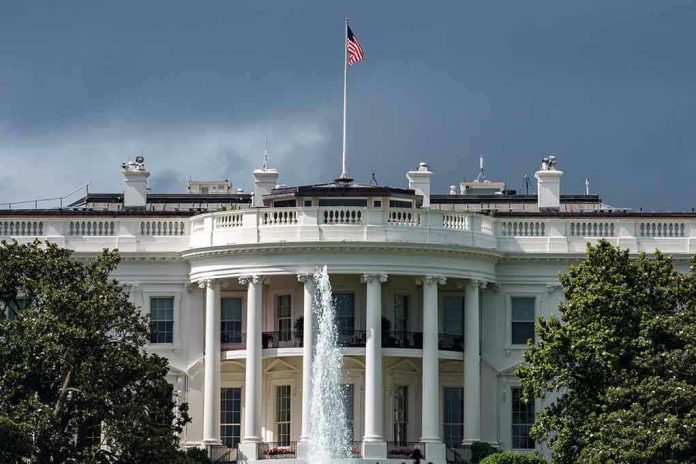
Trump paved over the Rose Garden, bulldozed the East Garden, cut down historic trees planted by former presidents, demolished the entire East Wing of the White House without proper approvals or funding, killed the South lawn and fucked up the reflecting pool.
— Critter (@asclepiasyriaca) June 21, 2026
The core weakness here is sourcing. The tree claim rests on unnamed White House sources cited by the book’s authors. No White House memo, landscaping contract, or named staffer has confirmed the timing on the record. That does not make the story false. Haberman and Swan are serious reporters with strong track records. But it does mean the public is one step removed from proof. Anyone applying fair standards should note that gap before treating the claim as settled fact.
Trump Was Also Actively Running the War, Not Just Ordering Trees
The fuller picture is more complicated than the headline suggests. Trump submitted a formal war powers report to Congress on March 2, notifying lawmakers of the strikes he authorized. [1] He rejected Iran’s proposal to end the war, saying publicly he was “not satisfied” with the terms. [4] His Defense Secretary said the most intense strikes were still coming. These are not the actions of a man who forgot there was a war. A president can care about maple trees and military strategy at the same time. That is worth saying plainly.
Still, the optics Trump created are hard to defend. On camera, he showed a reporter architectural renderings of a new White House ballroom while discussing regime change in Iran. [6] He told the reporter the war was “very complete” and would end “very soon.” [3] Whether those were deliberate messaging choices or genuine mixed signals, they handed critics an easy target. A wartime president showing off ballroom blueprints is not a great look, regardless of what was happening behind closed doors.
The UFC Party and the Pattern Critics Are Pointing To
The tree story does not stand alone. Around the same period, Trump hosted a Ultimate Fighting Championship event on the White House South Lawn for his 80th birthday. White House correspondent April Ryan called it “demeaning the office” and “demeaning the sanctity” of the grounds during wartime. Wall Street Journal reporter Sabrina Siddiqui framed the event as a “political distraction amid an unpopular war with Iran, rising inflation, and legal setbacks.” These are opinions, but they reflect a real pattern critics are drawing attention to.
Lawrence reading from Regime Change: As he greeted us, the war seemed the furthest thing from Trump's mind. On the resolute desk, instead of a map of the Middle East, were printouts of maple trees. I'm ordering trees for the white house, trump told us. I know how to buy good… pic.twitter.com/zwGWvfHdKs
— Acyn (@Acyn) June 23, 2026
Historians and political scientists have long studied what they call diversionary foreign policy, where leaders use spectacle or foreign conflict to shift public attention away from domestic problems. That framework does not require bad faith to apply. Sometimes leaders simply have different ideas about what leadership looks like in public. Trump’s real estate background means he genuinely does know trees, ballrooms, and construction. That context does not erase the optics problem. It just explains where the instinct comes from.
Why the Tree Story Matters Beyond the Punchline
The easy reaction to the maple tree story is to laugh or rage, depending on your politics. Neither response gets you very far. The harder question is what a president’s public priorities signal to allies, enemies, and the American families with people in uniform. Words and images matter in wartime. Franklin Roosevelt and Abraham Lincoln understood that. Trump’s wartime communication style is genuinely different from past presidents, and that difference carries real consequences for how the country and the world read American resolve. [19]
The tree claim may be accurate, partly accurate, or taken out of context. Until White House procurement records or named witnesses surface, no one can say for certain. What is not in dispute is that Trump chose to show ballroom blueprints on camera during an active war, said the conflict was “very complete” before it was over, and hosted a birthday party on the South Lawn while strikes were ongoing. The trees may be the least of it.
Sources:
[1] Web – Trump Reportedly Fixated on Ordering Trees at Beginning of Iran War: …
[3] Web – House passes resolution to end hostilities with Iran – NPR
[4] YouTube – White House gives mixed messages on war with Iran as …
[6] Web – Trump knocks Republicans who backed Iran war powers votes
[11] Web – House approves resolution to halt military action against Iran
[19] Web – The politics of distraction: Evidence from presidential executive …