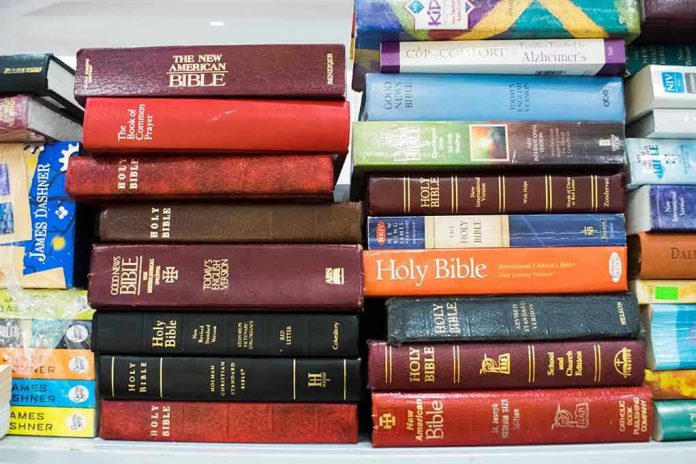
Texas nearly turned “one book per grade” into a state-mandated canon of almost 300 titles—and the fight isn’t just about books, it’s about who gets to define American childhood.
Quick Take
- The Texas State Board of Education delayed a vote on a proposed required K-12 reading list after hours of public debate and a 13-1 decision to wait until April 2026.
- Critics say the list leans heavily Christian and doesn’t reflect Texas’ majority Hispanic and Black student population.
- The proposal goes far beyond the underlying law’s minimum requirement, raising alarms about teacher flexibility and local control.
- Supporters argue for protecting a shared literary canon, while opponents warn the state is picking cultural winners and losers.
A reading list that became a political map of Texas
The Texas Education Agency built the proposed list after a 2023 law required the state to produce at least one literary work per grade for State Board approval, with implementation set for the 2030-31 school year. The agency’s draft didn’t stop at the minimum. It ballooned to nearly 300 required readings, mixing familiar classics with selections that critics say repeatedly spotlight Christian themes.
That scale matters because a “required” list changes classroom gravity. Teachers can still teach beyond it, but mandates shape pacing, assessments, and what administrators expect to see in lesson plans. When a list grows this long, it functions less like guidance and more like a statewide script—especially for new teachers, struggling campuses, and districts that fear penalties for straying from the approved path.
Why the board hit pause: religion, representation, and rigidity
At the January 28, 2026 meeting, the State Board heard hours of testimony before voting 13-1 to delay final action until April. Democratic members and public commenters pressed two connected objections: the list’s heavy Christian content and the lack of racial, ethnic, and gender diversity across grade levels. They also challenged the list’s sheer length, arguing it limits professional discretion in classrooms that vary widely across Texas.
Those concerns aren’t abstract in a state where students of color predominate. Educators often describe reading as both “windows and mirrors”: windows into worlds students haven’t seen and mirrors that reflect their own lives back with dignity. A list that underrepresents Hispanic and Black authors, or that overweights one religious tradition, risks turning English class into a lesson about who counts as “standard” and who remains a footnote.
The constitutional argument collides with common sense
Opponents invoked the Establishment Clause, saying state-mandated Christian parables can look like government endorsement of religion, even if educators present them as cultural literacy. That argument carries weight when the state isn’t merely allowing a teacher to choose a text, but requiring it statewide. Common sense matters here: public schools serve families of many faiths and none, and mandates should avoid giving any parent a reason to suspect the state is catechizing their child.
Conservatives who care about limited government should see the tension. A canon can be valuable, but a state-enforced canon can also become a vehicle for ideological capture—today by one coalition, tomorrow by another. The most stable path usually favors local control, strong parental rights, and clear opt-outs without academic penalties. If students can “opt out” on paper but still face tests tied to the material, the option starts to look cosmetic.
What TEA says it’s doing, and why teachers aren’t convinced
TEA leaders defended the draft by pointing to teacher input—roughly 5,700 educators surveyed—along with comparisons to other states and outside organizations. The agency also argued the list may be shorter than what many teachers already assign across a year. That claim can be true in a narrow sense, but it ducks the core objection: teachers choose their long lists. The state’s version comes with enforcement power.
Teachers don’t fear Shakespeare or Douglass; they fear paperwork, pacing calendars, and compliance reviews. A long “required” list invites districts to build lockstep scope-and-sequence documents, then treat those documents as non-negotiable. That can flatten the best part of teaching English: matching a class’s needs to a text, whether that means more foundational reading, more American civics, or more literature that connects with local communities.
The 2025 precedent hovering over the room
This debate didn’t start in January. In 2025, the board approved an optional curriculum that included Bible and Christianity references and drew criticism for how it handled racism and slavery. About a quarter of districts—covering roughly 400,000 students—adopted parts of it, reportedly skipping most of the Bible content. That episode taught both sides a lesson: Texas can place religious material on the menu, but districts will quietly edit what they serve.
The new reading list differs in one crucial way: it’s not optional. That difference explains the emotional testimony from board members and students who described a school experience where they rarely saw themselves in assigned texts. When the state requires a list, the question stops being “Can a teacher teach this?” and becomes “Should Texas compel every teacher to teach this?”
The quiet compromise Texas could still make by April
The delay gives the board a narrow window to fix what’s fixable: shorten the list drastically, widen author representation, and clarify that teachers can substitute comparable works without bureaucratic warfare. Republicans such as Will Hickman floated edits and replacements, signaling a path that preserves cultural literacy without hardwiring a single worldview. That approach aligns with conservative instincts: set high standards, then trust professionals and parents locally.
If Texas insists on a shared baseline, it should act like a baseline: small, balanced, and defensible under constitutional scrutiny. The state can include the Bible as literature in context—alongside other foundational texts—without turning the curriculum into a religious litmus test. The board’s April vote will reveal whether Texas wants a reading list that builds citizens, or a reading list that builds a political coalition.
Sources:
Proposed reading list for Texas students draws concern over religious themes, lack of diversity
Texas Board of Education delays vote on reading list
Is the Bible Part of the U.S. Literary Canon? Texas Reading List Sparks Debate
Important changes coming to Texas students’ required reading list