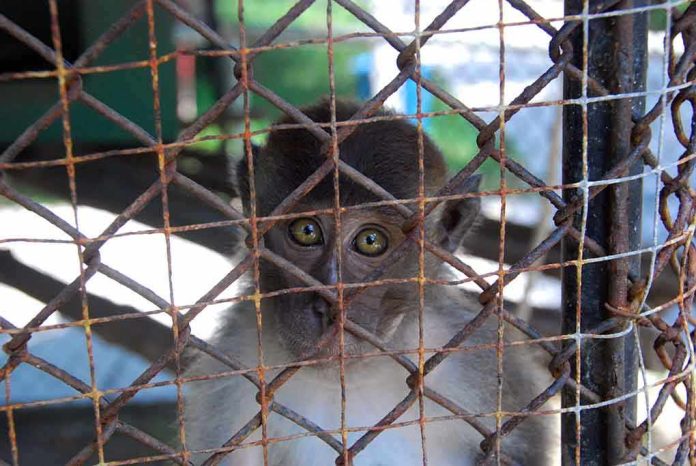
Florida’s “wild monkey” debate isn’t really about cute animals—it’s about what happens when human-caused mistakes collide with public safety, property rights, and fragile ecosystems.
At a Glance
- Florida’s established monkey populations trace back to releases and escapes tied to tourism, research facilities, and private ownership.
- Rhesus macaques at Silver Springs grew to roughly 400 by the 1980s, after starting from a small tourism-driven release in the 1930s.
- Trapping and removal controlled growth for decades, but controversy over animal welfare and sales to research facilities helped end that program after 2012.
- Documented conflicts include reported attacks in Titusville in 1977 and ongoing feeding/habituation problems in Dania Beach despite a local ordinance.
How Florida Ended Up With Wild Monkeys in the First Place
Florida’s non-native monkey populations did not appear through natural migration. Reports trace the best-known colony—rhesus macaques along the Silver River in today’s Silver Springs State Park—to the 1930s, when a river-boat operator released about six macaques to boost “Jungle Cruise” tourism. Because rhesus macaques swim well, the animals reached the forest and established a breeding population that persisted for decades.
Other colonies formed for similar human-created reasons. Vervet monkeys near Dania Beach are linked to escapes connected to a primate-research operation in the 1940s, and genetic tracking tied that population to the Dania Chimpanzee Farm era around 1948. Additional releases and escapes occurred when a Titusville amusement park closed in the 1970s, and long-tailed macaques were introduced near Miami in the 1930s for research and later became a tourist attraction.
Population Growth and Why “Leave Them Alone” Isn’t a Policy
Florida’s monkey question often gets framed emotionally—protect them or remove them—but the practical issue is that established invasive populations can expand and create recurring conflicts. By the 1980s, the Silver River rhesus population was estimated at about 400 animals. That kind of scale changes the equation from “sighting” to “management,” especially when monkeys adapt well around people and are difficult to recapture once dispersed.
The record also shows uncertainty that matters for voters who want accountability. The research indicates hurricanes and facility damage have contributed to escapes over time, and that recapture efforts have repeatedly failed in documented breakout cases. The Titusville rhesus population illustrates the limits of what the public actually knows: the group was last seen in the early 1990s, and sources do not clearly document whether the monkeys were trapped, died off, or simply disappeared into less-monitored areas.
Ecological Damage and Community Safety Concerns
Environmental impacts are not hypothetical. Reports attribute significant mangrove destruction to rhesus macaques, including an estimate that by the mid-1990s they had destroyed 30 acres of mangroves on Key Lois. Mangroves matter in Florida because they stabilize shorelines and provide habitat. When an invasive population damages those systems, taxpayers and local communities can end up paying for restoration while also dealing with broader habitat loss.
Public safety issues add another layer. Residents in Titusville reported being attacked by rhesus macaques in 1977, a reminder that these are not domesticated animals even when they look “tourist-friendly.” In Dania Beach, vervet monkeys have become highly habituated to humans and are regularly fed, despite a 1993 ordinance prohibiting feeding that sources say is not regularly enforced. Habituation increases the odds of conflict—especially when animals begin associating neighborhoods with food.
The State’s Mixed Approach: Trapping, Controversy, and Inconsistent Enforcement
Florida’s primary management tool historically has been trapping and removal, but the record shows why the issue remains unresolved. From 1984 to 2012, the Silver River rhesus population was managed through trapping and removal, and roughly 1,000 macaques were removed during that period. Those removals became controversial because private trappers sold captured monkeys to biomedical research facilities, blending wildlife control with a commercial pipeline many citizens found ethically troubling.
That controversy helps explain why decisive action has been uneven. Sources describe the trapping program as halted after 2012, while Dania Beach has seen no sustained official control program even as feeding continues. The research also notes a contrast with other invasives: Florida has adopted aggressive approaches for species like Burmese pythons, including open seasons, but has not applied similarly aggressive policies to monkeys. The result is a patchwork that leaves local communities and property owners stuck between “do nothing” and “do something,” with no consistent statewide standard.
So Should People “Protect” Florida’s Wild Monkeys?
The research does not present a modern (2024–2026) expert consensus declaring that Florida should protect these invasive populations as wildlife to preserve. What it does document is a series of human-caused introductions, measurable ecological harm in some locations, and repeated human-wildlife conflicts. From a limited-government, common-sense perspective, “protection” should not mean encouraging growth through feeding or treating invasives as untouchable mascots when they damage habitat and stress local communities.
The more defensible takeaway from the available facts is targeted, accountable management that reduces harm while avoiding ethically questionable incentives. That means enforcing existing local rules that prohibit feeding, improving transparency around any trapping contracts, and prioritizing public safety and ecosystem protection—without turning wildlife policy into a political theater. The research base is strong on history and impacts, but limited on recent population counts and current policy recommendations, so citizens should demand updated data before Florida locks in long-term decisions.