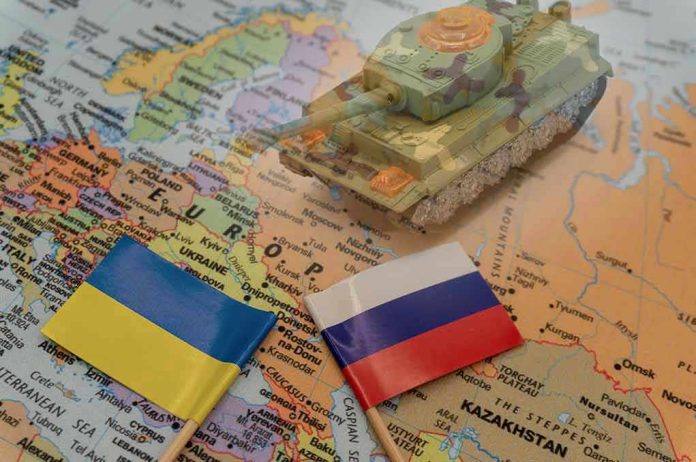
A recent array of Ukrainian strikes inside Russia has left the Kremlin scrambling to protect its energy infrastructure, highlighting the ongoing tensions between these nations.
Story Highlights
- Ukrainian forces launched multiple strikes on Russian territory, targeting key infrastructure.
- The attacks disrupted Russia’s energy logistics and military assets.
- Russia retaliated with drone strikes on Ukrainian energy facilities.
- This escalation underscores the strategic depth of Ukraine’s military operations.
Details of the Strikes
On December 22, 2025, Ukrainian Defense Forces executed a coordinated attack on Russian soil, targeting the Tamanneftegaz oil terminal in Krasnodar Krai along with an ammunition depot, a drone launch site, a pipeline, two docks, two ships, and two parked jet fighters. The strikes resulted in significant damage, causing a large fire at the oil terminal. This marks a significant escalation in Ukraine’s strategy to undermine Russia’s military logistics and energy supply chain.
In response, Russia launched 86 drones targeting Ukrainian energy infrastructure, with Ukraine successfully intercepting 58. These retaliatory strikes aimed at crippling Ukraine’s energy capabilities during the harsh winter months. The ongoing exchange of attacks has intensified the conflict, showcasing Ukraine’s tactical use of long-range drones to target strategic Russian assets.
Strategic Implications
The recent events illustrate a shift in Ukraine’s military strategy, focusing on deep strikes into Russian territory to disrupt critical supply lines and military operations. By targeting oil infrastructure and military assets, Ukraine aims to weaken Russia’s economic and logistical support for its ongoing military campaigns. This approach aligns with Ukraine’s broader objective to counteract the numerical superiority of Russian forces.
The strikes also serve as a response to Russia’s efforts to “weaponize winter” by targeting Ukrainian energy grids. By hitting back at Russia’s energy infrastructure, Ukraine seeks to balance the scales and maintain its defensive capabilities.
International and Domestic Reactions
The international community is closely monitoring the situation as the conflict threatens to destabilize the region further. The strikes have drawn attention to the broader geopolitical implications, with potential impacts on global energy markets. Domestically, both Russian and Ukrainian citizens face the immediate consequences of these military actions, from energy shortages to heightened security concerns.
As the conflict continues, the power dynamics between Ukraine and Russia remain in flux, with both sides leveraging their resources to gain strategic advantages. The ongoing military engagements underscore the complexities of the conflict and the challenges in finding a diplomatic resolution.
Sources:
Timeline of the Russo-Ukrainian War (1 June 2025 – 31 August 2025)
Ukraine Strikes Oil Terminal, Planes and Ships in an Array of Strikes Inside Russia
Ukraine Strikes Oil Terminal, Planes and Ships in an Array of Strikes
Ahram Online Report on Ukrainian Strikes