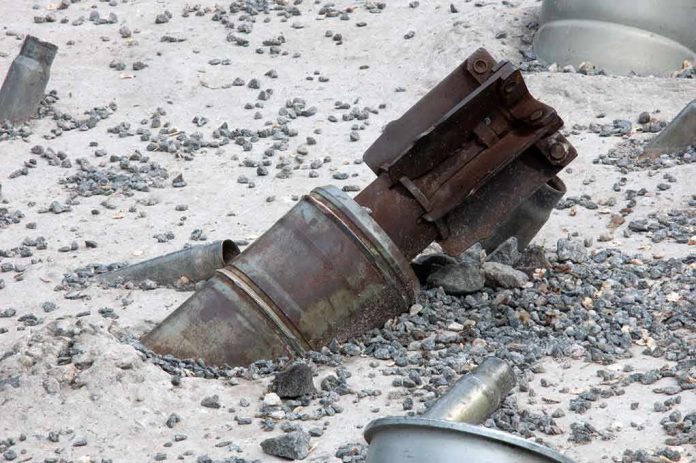
Six silent metal spheres rolling out of the surf in Queensland did something rare in today’s news cycle: they forced people to stare straight at the real cost of our space age.
Story Snapshot
- Six large metal spheres on Forrest Beach were identified as pressure vessels from a foreign rocket
- Authorities locked down the area over fears of toxic or explosive rocket fuel inside the debris
- The Australian Space Agency says the objects are now safe and under investigation
- The case highlights who really owns, and pays for, dangerous “space junk” when it lands on your doorstep
Mysterious spheres roll in from the sea
People walking along Forrest Beach in northern Queensland saw them first, scattered near the high-tide line like props from a low-budget sci-fi movie. Six solid metal spheres, scorched, dented, and big enough that a grown adult could hardly wrap their arms around one. Locals did what people do now: they filmed, posted, and joked about aliens. Emergency crews did something very different: they moved in, set up a 50‑meter exclusion zone, and treated the beach like a hazmat site.
Queensland fire and emergency teams had good reason to be careful. Space experts call these objects “space balls” when they fall back to Earth, but there is nothing cute about them. These spheres can be pressure vessels that once held highly toxic or even explosive rocket fuel. If one ruptures, it could spray chemical residue, shrapnel, or both. Crews in protective gear checked for fumes, heat, and leaks before they even let the public get close enough for clear photos.
From alien rumors to a hard-nosed space junk case
The Australian Space Agency moved fast once the first images hit social and local media. In a public statement, the agency said the recovered objects “appear to be pressure vessels from a space launch vehicle,” based on their size, shape, and hardware details. Officials added that the spheres’ location and scorch marks matched the likely path of a “foreign rocket body that recently re-entered the atmosphere from orbit.” That is bureaucratic talk for something simple: this was somebody else’s rocket trash.
By early July, the agency said it had “identified the likely source” of the debris but stopped short of naming which country or company was responsible. That silence is not some cover-up movie plot. It fits a pattern. After earlier debris events, like a SpaceX capsule chunk in New South Wales and a broken Polar Satellite Launch Vehicle stage in Western Australia, Australia quietly investigated first and only named names after talks with the launching country. International space law makes this more than a naming-and-shaming game; it is a legal process.
How dangerous were the Forrest Beach spheres?
On the ground, families near the beach had one question: are these things going to blow up or poison someone? Queensland emergency teams assessed and recovered the spheres and then declared them safe. That means no active fuel, no immediate explosion risk, and no obvious leak. Still, Australia’s own guidance on space debris is blunt: do not touch, move, or cut into any suspected space object, because materials and residues can be hazardous even when “cold.” The smart move is to stay back and call authorities, not drag a souvenir to the shed.
Six mysterious metal spheres that washed ashore last weekend at Forrest Beach in northern #Queensland, #Australia, are “suspected #space debris,” the Australian Space Agency announced. Amen Galinato has the details.https://t.co/1fwG3CtbF1
— CNN Asia Pacific PR (@cnnasiapr) July 13, 2026
From a conservative, common-sense view, this is exactly how government is supposed to work. Local responders protected the community first. The national space agency then used its expertise to identify the threat and secure the evidence. No wild alien press conference. No panic. Just a sober response to a man-made mess falling out of the sky. The weak point is not the emergency work. It is what happens next, in the slow world of treaties and international responsibility.
Who owns this junk, and who pays the bill?
Here is the part most headlines skip. Under the United Nations Outer Space Treaty and its related agreements, the “launching state” owns its space objects forever, even when they break up and land in another country. Australia cannot just cut up the Forrest Beach spheres and sell them for scrap. If the foreign government or company asks for the debris back, Australia is supposed to hand it over. That sounds polite on paper, but it raises a sharper question: who pays when someone else’s rocket parts hit your coast?
Australia has been here before. India confirmed that a huge cylinder on a Western Australia beach in 2023 came from one of its Polar Satellite Launch Vehicles. Another scorched piece in the outback was likely from a Chinese rocket. Each time, Australia does the cleanup, carries the risk, and then waits for diplomatic talks about origin and liability. For ordinary people, that looks a lot like the old story: locals deal with the mess, faraway actors enjoy the benefits.
What this says about the new space race
The Forrest Beach spheres are not proof of some alien visit. They are proof that the new space race is very real, and its debris field is growing. More launches mean more dead rockets, broken stages, and failed satellites dropping back through the atmosphere. Most burn up. Some do not. When those pieces land, they do not fall on the doorsteps of elite conference rooms in Geneva. They fall on farms, beaches, and mining roads owned by regular people who never voted on any rocket launch schedule.
Media outlets rushed to reassure readers that the Queensland spheres had a “rational, cosmic explanation” and were “not aliens.” That is fine as far as it goes. But the harder, more adult question is this: will space-faring nations be held to the same standard we demand of any neighbor who dumps trash over the fence? A conservative, rule-of-law mindset says yes. Actions have consequences. If you put metal and fuel in the sky, you should own the cleanup when it comes down.
Sources:
insiderpaper.com, bbc.com, usatoday.com, foxweather.com, bbc.co.uk, caesar.org, emeraldobservatory.com.au, cnn.com