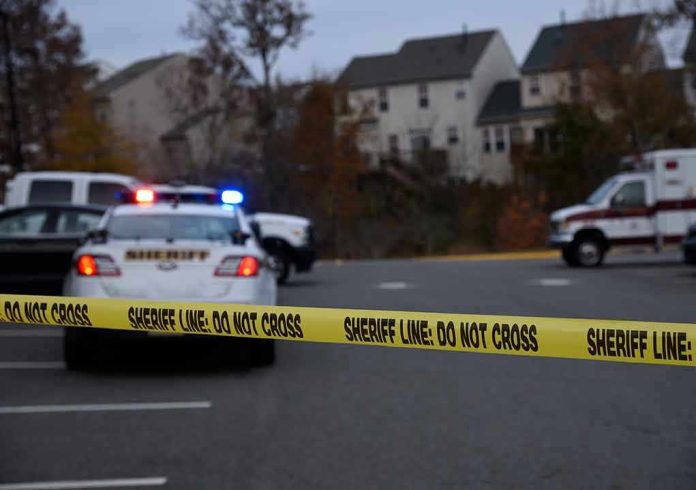
A mental health crisis call in Boston turned deadly when the person being helped burst through his apartment door wielding a sword, stabbing a police officer and attacking multiple first responders before officers shot him dead.
Story Snapshot
- Boston responders spent 45 minutes trying to de-escalate a mental health crisis before a sword-wielding man burst from his apartment and attacked
- A police officer was stabbed in the arm, an EMS mental health clinician was knocked to the ground, and other responders were injured before officers fatally shot the attacker
- The incident underscores the deadly risks first responders face when mental health calls turn violent, contradicting narratives that unarmed clinicians alone can handle such situations
- Boston EMS issued a stark statement: “No one should face violence for simply doing their job”
When Compassion Meets Chaos on Hemenway Street
The Saturday morning 911 call seemed straightforward enough. A man at 212 Hemenway Street near Northeastern University reported four armed individuals threatening him outside his apartment. Boston police arrived around 10:45 a.m. to find no external threats. What they discovered instead was a person in mental distress barricaded behind his door, setting the stage for a textbook de-escalation attempt that would end in bloodshed. The response team eventually included EMS personnel and a mental health clinician, exactly the kind of collaborative approach advocates have championed for crisis intervention.
For nearly three-quarters of an hour, responders conversed with the individual through the closed door. They confirmed a mental health crisis was unfolding. This was not a criminal matter requiring force but a human being in psychological turmoil needing help. The team did everything by the book, exercising patience and expertise. Then, without warning, the door flew open. The man wielded not words but a sword, and the careful de-escalation dissolved into violence that would leave multiple first responders injured and one person dead.
The Attack That Shattered Progressive Illusions
The sword came down on a Boston police officer’s arm, drawing blood and chaos. The EMS clinician who had spent those crucial minutes trying to reach the troubled individual through dialogue was knocked violently to the ground. Other responders scrambled as the blade-wielding attacker continued his assault. Officers deployed a Taser and fired their service weapons, stopping the threat. Despite immediate medical aid from the very people he had just attacked, the man died at a hospital shortly after. This incident brutally exposes the flaw in arguments that mental health professionals can safely handle crisis calls without armed police backup.
Boston Police Commissioner Michael Cox and Suffolk County District Attorney Kevin Hayden both described the scene as chaotic. Hayden emphasized that responders did everything they could, both before and after the violence erupted. The injured officer required hospital treatment for the stab wound. Other responders sustained non-life-threatening injuries. All survived, but the psychological toll of being attacked while attempting to help someone cannot be measured in stitches and bandages alone. Boston EMS released a statement condemning the violence, asserting that no one should face such danger simply for doing their job.
The Inconvenient Truth About Mental Health Calls
This incident arrives amid national debates about reimagining emergency responses to mental health crises. Progressive activists have pushed for sending unarmed social workers or clinicians instead of police, arguing that armed officers escalate situations. Boston’s approach represented a middle ground: mental health professionals accompanied by police. Yet even with this model, disaster struck. The reality is that mental illness can produce unpredictable, violent behavior that compassion alone cannot stop. A sword does not care about your credentials or good intentions.
The attacker’s identity remains undisclosed, and investigators continue piecing together what triggered the sudden explosion of violence after nearly an hour of calm communication. The false initial report of armed intruders outside suggests paranoia or delusion drove the 911 call. What matters is that trained professionals attempted every non-violent option before force became necessary. This was not a trigger-happy police shooting. This was survival. When a blade-wielding person attacks, officers have seconds to protect themselves and others. The outcome, while tragic, was justified.
First Responders Deserve Better Than Platitudes
The broader implications reach beyond one Saturday morning in Boston. Cities experimenting with unarmed crisis response teams must reckon with this sobering reality. Mental health clinicians are not expendable sacrifices to progressive ideology. They deserve protection, which often means armed officers standing ready when talk fails and violence erupts. The notion that we can simply replace police with social workers in crisis situations is not just naive but dangerous, as this incident demonstrates with brutal clarity.
Boston’s approach, pairing clinicians with police, represents common sense. Mental health expertise matters, but so does the ability to respond to lethal threats. The officers who stopped this attack saved lives, possibly including the mental health clinician who came to help. Yet national conversations often ignore such nuances, preferring simplistic narratives about police violence rather than acknowledging the impossible split-second decisions officers face. These responders showed up to help someone in crisis and were attacked for their trouble. They responded with measured force only when absolutely necessary.
Sources:
Boston police fatally shoot person who attacked officer and EMS clinician with a sword
Person armed with sword fatally shot by police after attacking officers, EMS clinician
Sword-wielding man stabs Boston Police officer near Northeastern University