The recent explosion in Kabul not only highlights the persistent violence plaguing Afghanistan but also underscores the complex geopolitical tensions involving Chinese interests in the region.
Story Summary
- An explosion in Kabul’s Shahr-e-Naw district resulted in at least seven fatalities and 13 injuries.
- Chinese nationals were possibly the intended targets of the attack.
- The blast occurred in a central commercial area frequently visited by foreigners.
- No group has claimed responsibility, although suspicions point towards ISIS-K.
Explosion in Kabul’s Heart
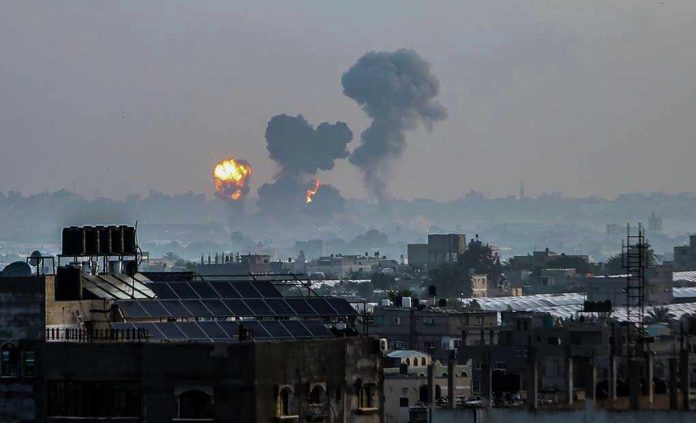
The explosion happened on the afternoon of January 19, 2026, in the bustling Shahr-e-Naw district of Kabul, a central area known for its commercial activities and frequented by foreigners. Initial reports indicate that a hotel or restaurant in Gulforoshi Alley was the site of the blast, which resulted in seven deaths and 13 injuries out of 20 casualties, including four women and one child. The Emergency Hospital confirmed these figures, highlighting the civilian toll of the attack.
Taliban police spokesman Khalid Zadran confirmed the explosion, although details about the cause or device used remain undisclosed. The lack of a claim of responsibility differentiates this incident from previous attacks by ISIS-K, which often targets foreigners. The involvement of Chinese nationals, who were among the injured, suggests they may have been the intended targets. This incident raises questions about the Taliban’s ability to maintain security in the capital.
Targeting Chinese Nationals
Chinese nationals have increasingly become potential targets in Afghanistan due to China’s growing economic interests through Belt and Road investments. The attack in Shahr-e-Naw aligns with previous incidents where Chinese interests were targeted, reflecting a pattern of anti-Chinese sentiment among insurgent groups. The injured Chinese nationals add weight to this theory, despite the lack of an official claim of responsibility. The Taliban’s initial response has been to downplay the incident, likely to preserve their image of stability.
The geopolitical implications of this attack are significant. China’s projects in Afghanistan, such as the Mes Aynak mine, have been met with resistance from local insurgents. This incident could strain relations between China and the Taliban, as Beijing may push for increased security measures to protect its nationals and investments.
Impact on Kabul’s Security Landscape
The explosion has immediate and long-term implications for Kabul’s security. In the short term, heightened security around sites frequented by foreigners and Chinese nationals is expected. The Taliban may also retaliate against suspected perpetrators to assert control. However, the long-term effects could include a chilling of foreign investment and an increased perception of instability in Afghanistan, potentially deterring future economic projects.
The incident also impacts the local community, particularly in Shahr-e-Naw, where businesses and residents are likely to experience disruptions. The broader hospitality and security sectors in Kabul face challenges in ensuring safety, which could affect the city’s economy and social fabric.
Ongoing Investigation and Speculation
As of the evening of January 19, the investigation into the explosion continues. The Emergency Hospital’s figures remain preliminary, with the possibility of revisions as more information becomes available. The Taliban police have confirmed the casualties but have not provided details on the cause or type of explosive used. Media outlets have reported on the potential targeting of Chinese nationals, although this remains speculative without official confirmation.
The lack of a claim of responsibility leaves room for speculation about the perpetrators. While ISIS-K is suspected due to their history of targeting foreigners, particularly Chinese nationals, the absence of a formal claim distinguishes this attack from previous ones. The investigation’s outcome could have significant implications for Afghanistan’s security dynamics and its relations with international partners.