Iran says the world’s oil choke point is shut, JD Vance says it is humming with ships, and buried in that clash is the real story of who holds power, who is bluffing, and who is paying the bill.
Story Snapshot
- Iran’s generals and parliament talk about “closing” Hormuz, but U.S. data shows tankers still moving.
- JD Vance promises 60 days of toll-free passage and claims record flows through the strait.
- Iran keeps turning legal and military dials to look in charge without fully pulling the trigger.
- Every headline about Hormuz doubles as a stress test for Western energy security and resolve.
Iran’s closure headline versus what is really happening on the water
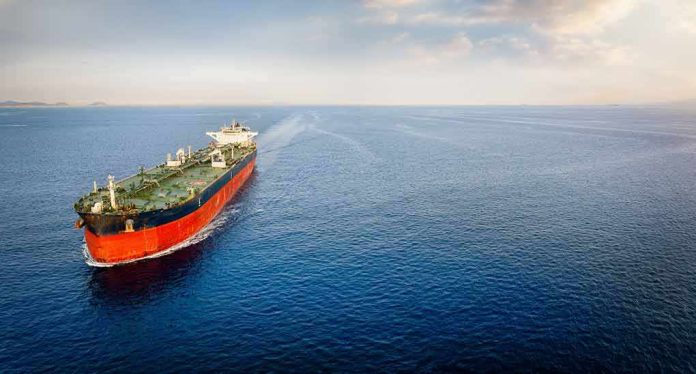
Iran’s leaders know one phrase can rattle every trader on Earth: “We are closing the Strait of Hormuz.” They used it again after U.S. strikes on Iranian nuclear sites, with Iranian media and foreign outlets reporting that parliament had backed a move to shut the waterway that carries about a fifth of the world’s oil.[1] Lawmakers framed this as a response to “brutal military aggression” against what they call peaceful nuclear facilities, and broadcast the vote as unanimous.[2] That sounds like a door slamming on global shipping. But it is only the first layer.
Under Iran’s own system, parliament does not actually control the lock on that door. The legal authority sits with the Supreme National Security Council and, above it, the Supreme Leader himself.[1] Even a strong, unanimous vote in parliament is described inside Iran as “consultative,” not binding.[2] Think of it less as turning off the highway and more as flashing a giant warning sign over it. The message is political: “We can make this hurt.” The question is whether they really can, or will.
From symbolic votes to military orders and new tolls
Iran has spent years building a paper and military toolkit to make Hormuz look like its own toll road. Before the latest crisis, lawmakers pushed a bill to formalize “management and sovereignty” over the strait, insisting only Iran and Oman should decide how it is run.[3] They talked up a “Strait of Hormuz Management Plan” that would let Tehran tax global shipping in local currency and ban “hostile” vessels.[16] At the same time, the Revolutionary Guard used restrictions and threats to bring traffic near a halt during fighting, then rolled out a Persian Gulf Strait Authority to regulate transit.[15] This blends legal theater with hard power, but it still stops short of a clean, lasting closure.
When fighting escalated, Iran’s top joint military command, the Khatam al-Anbiya headquarters, went further than parliament. It announced the strait was closed to vessel traffic in response to what it called U.S. and Israeli violations of a ceasefire memorandum in Lebanon.[1][3] The Revolutionary Guard then declared Hormuz shut to all vessels and warned ships that entering the area could put their safety at risk.[1] Those statements matter more than a vote, because they signal potential use of force. Yet even here, outside shipping data and foreign reporting have shown vessels still edging through or turning around, which suggests a contested “closure,” not an airtight blockade.[4][5]
Vance’s open-strait story and the 60‑day toll-free promise
While Tehran talks closure, JD Vance presents the mirror image story to American and global audiences. He tells CNBC that the United States expects the strait to remain open “toll free” over the long term and frames current talks with Iran as technical, not existential.[9] In detailed remarks on the U.S.-Iran memorandum of understanding, he says Washington will lift its own blockade on ships moving in and out of Iranian ports and in return “they’re going to open the Strait of Hormuz.”[10] That alone flips the script: the United States portrays itself not as begging for access, but as trading economic relief for shared openness.
Vance says the memorandum guarantees sixty days of toll-free passage, with the future of Hormuz left to regional talks between Iran, Oman, and Gulf states.[10] He repeats a core conservative idea: international waterways should be free of tolls and kept open, not used as cash machines by hostile regimes.[10] In other interviews he goes further, saying “the blockade is off,” “the straits are now open,” and that traffic is already picking up.[12] He even cites figures like more than twelve million barrels crossing in a single night, and U.S. officials talk about dozens of ships per day transiting now with a goal of reaching fifty.[11][13] Those are not the words of a government that believes Hormuz is shut tight.
What past crises teach about bluffs, limits, and common sense
The pattern over the last decade is clear. Iran reaches for Hormuz whenever it wants leverage, but it has never managed to keep the strait truly closed.[18] During the 2025 “twelve-day war,” parliament again authorized closing the strait after U.S. strikes on nuclear facilities, yet the Supreme National Security Council never gave final approval and traffic never fully stopped.[18] The move spooked markets, pushed some tankers to reverse course, and raised prices. It did not deliver the decisive chokehold Iran liked to hint at. That history matters now because it sets the base rate: threats are frequent, lasting closures are rare.
⚠️ IRAN THREATENS HORMUZ CLOSURE AND BLOCKS IAEA ACCESS AS ISRAELI OFFICIALS WARN OF SHIFTING U.S. SUPPORT AND RISING TURKISH INFLUENCE
⚓ HORMUZ THREATS ESCALATE: Iranian state media and hardline Islamic Revolutionary Guard Corps-linked reports threatened the indefinite closure… pic.twitter.com/TLsCxMjZFF
— Israel Realtime (@IsraelRealtime) June 19, 2026
From a conservative, common-sense perspective, most of Tehran’s behavior looks less like a serious plan and more like brinkmanship with built-in limits. Iranian elites know that fully shutting Hormuz would slash their own oil exports, wreck their already weak economy, and risk outright war with the United States and its allies.[17][18] Analysts call that move “economically suicidal,” and they are right. You do not burn down the only bridge you still own when your house is already on fire. So Iran tends to hover at the edge: naval threats, legal posturing, symbolic “closure” decrees, but enough slippage to keep some traffic and deniability.
Why this matters for Western energy security and resolve
Hormuz drama is not just another far-off spat. It is a live test of whether Western governments will protect open trade routes or let an aggressive regime turn them into a weapon. The United States and its partners have an interest in two hard lines: first, that international straits stay open without new tolls; second, that nuclear blackmail and proxy attacks do not earn Iran extra cash or control. Vance’s push for toll-free passage and a regional security deal moves in that direction, but it only works if the United States backs it with clear deterrence and real naval presence.[9][10]
For readers at home, the practical bottom line is simple. When you see “Hormuz closed” splashed across a screen, ask three questions. Who gave the order: parliament, a general, or the Supreme National Security Council? Are ships actually stopping, based on independent tracking, not just claims? And what is Washington doing at sea and at the bargaining table to keep energy flowing without paying ransom? Those answers tell you whether you are watching a real crisis, a pressure tactic, or both layered together.
Sources:
[1] Web – JUST IN: Iran Says It’s Closing the Strait of Hormuz After Accusing US …
[2] Web – Iran Parliament Backs Strait of Hormuz Closure After US Strikes
[3] YouTube – Iran Parliament votes to back Hormuz closure, top security body …
[4] Web – Iran parliament moves to legislate control over Strait of Hormuz
[5] Web – Iran’s Parliament Speaker Says Strait of Hormuz “Won’t Return to Its …
[9] Web – Strait of Hormuz | International Crisis Group
[10] Web – Vance says U.S. expects Strait of Hormuz to be open ‘toll free’ long …
[11] YouTube – Vice President Vance shares plan on keeping Strait of Hormuz open
[12] Web – VP Vance says U.S. expects Strait of Hormuz to be open ‘toll … – …
[13] Web – Trump is urging tankers to sail through Hormuz. Vessels aren’t so …
[15] Web – Vice President JD Vance said more oil is now flowing through the …
[16] Web – Vice President Vance pushes back on claims about Iran, saying the …
[17] Web – JD Vance says 12.5m barrels of oil passed through Strait of … – ITVX
[18] Web – Vice President JD Vance said more oil is now flowing through the …