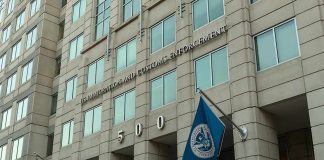
President Trump said Immigration and Customs Enforcement has opened enforcement proceedings linked to allegations of immigration fraud involving Representative Ilhan Omar, and the paper trail shows the government treating it like an active case.
Story Snapshot
- President Trump said ICE has begun enforcement proceedings tied to Omar’s alleged immigration fraud.
- U.S. Immigration and Customs Enforcement withheld records under Freedom of Information Act Exemption 7(A), signaling an active law enforcement matter.
- Vice President JD Vance said the Department of Justice was looking into Omar for possible immigration fraud.
- Ilhan Omar has denied wrongdoing and pushed back on related claims in recent months.
What the administration has said and what the record shows
President Trump told supporters that Immigration and Customs Enforcement had begun proceedings connected to alleged immigration fraud by Representative Ilhan Omar. That public claim lines up with an official withholding by U.S. Immigration and Customs Enforcement under the Freedom of Information Act. The agency cited Exemption 7(A), which the Department of Justice explains is used to protect records when releasing them could interfere with enforcement proceedings. This posture signals an open or contemplated enforcement track, not a closed file.
Vice President JD Vance added weight in May, saying the Department of Justice was looking into Omar for possible immigration fraud “right now,” and that prosecutors would act if they found evidence of a crime. The White House and Department of Homeland Security leaders have also amplified a focus on fraud-related vetting. Those signals, combined with U.S. Immigration and Customs Enforcement’s Exemption 7(A) response, show the executive branch treating the Omar matter as live law enforcement work.
How FOIA Exemption 7(A) fits into active cases
Freedom of Information Act Exemption 7(A) allows agencies to withhold law enforcement records if releasing them could harm a pending or prospective case. Department of Justice guidance says agencies must show both a pending or contemplated proceeding and that disclosure could cause harm, such as tipping targets or chilling witnesses. U.S. Immigration and Customs Enforcement used this exact exemption when asked for records tied to the Omar matter, which is consistent with an active enforcement context rather than a completed case.
Government agencies use Exemption 7(A) across many kinds of probes, from immigration fraud to financial crimes. The common thread is risk to enforcement. When agencies invoke it, they are saying the case is not over and that sunlight right now could disrupt their work. That does not pre-judge guilt. It explains the agency’s choice to keep files sealed while agents and prosecutors decide next steps.
Omar’s pushback and the clash over enforcement optics
Representative Omar has denied wrongdoing and dismissed claims about federal probes. She has also pressed Department of Homeland Security and Homeland Security Investigations leaders over tactics near her events. Her office has argued the administration targets critics, and she questioned the presence of an undercover Homeland Security Investigations agent outside a Minnesota town hall, calling it intimidation. The Guardian reported her oversight letter to Homeland Security Investigations seeking answers on that agent’s presence.
Other recent flashpoints have fed the showdown. Omar said her son was stopped by immigration officers last year, which the Department of Homeland Security disputed, saying it had no record of such a stop. Agency officials called the claim false, and news outlets reported the denial. The back-and-forth sharpened the political fight over enforcement and profiling, and it set the tone for today’s higher-stakes developments around alleged fraud and U.S. Immigration and Customs Enforcement actions.
What enforcement could mean and what comes next
Federal law provides tools when investigators suspect immigration fraud, including the power to bring criminal charges or, in some cases, to seek civil denaturalization and removal if fraud tainted the path to citizenship. The Department of Justice has used those tools against other individuals in the past, including filing civil complaints when evidence showed fraud in the naturalization process. The administration has now put Omar’s situation on that same legal map, at least procedurally.
Process should drive this to a clear resolution. If agents and prosecutors have a case, the public will see charges, filings, and court calendars. If not, the matter will close and records may open later. Until then, the government’s Exemption 7(A) stance, the president’s statement about U.S. Immigration and Customs Enforcement proceedings, and the vice president’s remark about a Department of Justice review all point to a live enforcement track moving through standard channels.
Sources:
thegatewaypundit.com, townhall.com, theguardian.com, x.com, foxnews.com, economictimes.indiatimes.com, realtalkdigest.com