A diarrhea-causing parasite has exploded across the country, and federal investigators are quietly asking a blunt question: did America’s favorite drive-thru tacos help spread it, or is Taco Bell just the easiest villain in a much bigger salad story?
Story Snapshot
- More than 3,300 Michiganders are sick in a huge cyclosporiasis parasite outbreak, far above normal levels
- Federal and state officials are probing Taco Bell while zeroing in on lettuce and salad greens as a likely source
- Taco Bell has yanked lettuce, pico de gallo, cilantro mixes and guacamole at some locations, calling it precaution only
- No agency has publicly proven Taco Bell caused the outbreak, and there is still no named farm, supplier, or product
How A Parasite Turned Fast Food Into A Crime Scene
Cyclosporiasis is a gut infection caused by a tiny parasite that rides in on contaminated food or water and then hits people with days or weeks of watery, sometimes “explosive” diarrhea, cramps, and fatigue. It does not spread person to person like a cold. People get sick when they eat raw produce tainted with human feces, often from fields or irrigation water, before the food ever reaches a kitchen. Past outbreaks have been tied to items like raspberries, basil, cilantro, and mixed salads.
This year, the numbers broke the usual pattern. The Centers for Disease Control and Prevention reported more than 1,600 lab-confirmed U.S. cases acquired in the country by mid-July, across over 30 states, and state counts push that total much higher. Michigan alone went from its normal 50 cases a year to more than 3,300, making it one of the largest cyclosporiasis spikes on record there. That kind of jump is not bad luck from random picnics. It screams shared source.
Why Investigators Are Staring Hard At Lettuce
Michigan health officials interviewed more than a thousand sick patients and kept hearing one food over and over: lettuce and other salad greens. Dr. Natasha Bagdasarian, the state’s chief medical executive, said lettuce “regularly comes up” in the investigation and that current results point to lettuce or salad greens as a potential source. Because of this, the state told people to skip bagged salads and premixed kits and instead buy whole heads, peel off the outer layers, and wash the rest carefully.
Federal food regulators backed that focus. The United States Food and Drug Administration said its traceback teams are digging through supply chains for multiple produce items and the locations visited by patients before they got sick. That kind of work follows a familiar script: officials use interview data to spot common foods, then chase records from warehouses, farms, and distributors to see where a bad batch could have started. When they see leafy greens and a huge cluster of cases tied to the same region, they treat lettuce as suspect until proven innocent.
Where Taco Bell Fits Into The Investigation Narrative
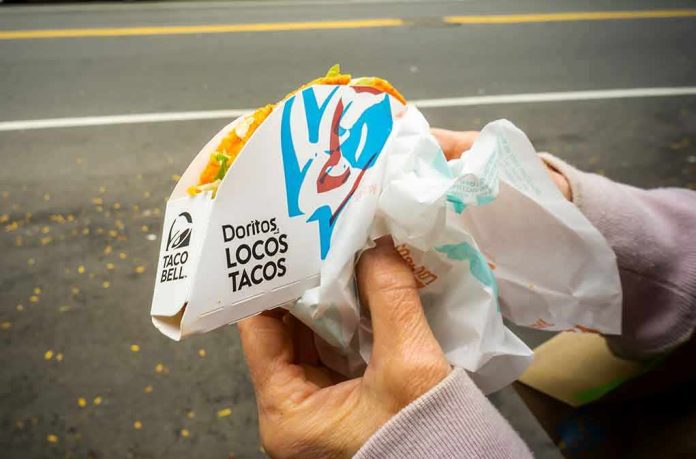
Into that picture walks Taco Bell, the Mexican-style fast food chain whose menu depends on shredded lettuce, pico de gallo, cilantro-onion mixes, and guacamole. Multiple reports say federal and state investigators are examining whether Taco Bell restaurants may have played a role in the outbreak, based on two unnamed sources familiar with the probe. Signs at several Detroit-area and southeast Michigan locations told customers the stores were “currently unable to sell Lettuce, Cilantro Onion, Pico de Gallo, and Guacamole due to a nationwide recall.”
Taco Bell responded by voluntarily and temporarily pulling those ingredients in selected restaurants, framing the move as a precaution while it cooperates with health officials. Business coverage notes that the chain is going further than the official guidance, trying to stay ahead of the story rather than waiting for a formal recall. For a national brand that has previously been tied to a major Escherichia coli outbreak linked to shredded lettuce in 2006, this is not just a food safety problem but a reputational and stock price emergency.
The Official Silence And Media Megaphone Gap
Here is where the picture shifts from science to narrative. Taco Bell told reporters that public health officials have not confirmed any link to its restaurants, ingredients, suppliers, or retailers. The United States Food and Drug Administration has not posted a public notice naming Taco Bell or ordered a recall of its products. On press calls, federal officials declined to say whether Taco Bell or any specific distributor is formally under investigation, sticking to general comments about lettuce and produce.
Taco Bell says it is cooperating with an investigation into a cyclosporiasis outbreak and has temporarily removed certain ingredients from select restaurants as a precaution. pic.twitter.com/zouFVc8UKX
— Breaking911 (@Breaking911) July 15, 2026
Meanwhile, major outlets blast dramatic headlines about an “explosive diarrhea” parasite and a Taco Bell investigation based on anonymous sources. Social media fills up with photos of ingredient-free menus and jokes about “taco terrorism.” That gap between cautious official language and loud media claims matters. From a conservative, common-sense view, anonymous leaks and recall-style signage can punish a business before anyone proves wrongdoing. Yet the same view also values transparency and swift action when thousands of people are sick and a likely food vehicle—leafy greens—is staring investigators in the face.
What We Know, What We Do Not, And What Should Happen Next
The hard facts at this point are narrow but serious. Epidemiology shows a large, linked outbreak with lettuce and salad greens as a common thread in many cases. Cyclosporiasis is historically tied to contaminated imported produce, and this spike matches that pattern. Taco Bell locations in Michigan and other states have removed key fresh ingredients and posted recall notices, and federal and state officials are examining whether the chain’s supply chain overlaps with the outbreak.
But there is still no proven smoking gun. No lab tests have publicly shown Cyclospora in Taco Bell lettuce. No specific farm, processor, or shipment has been named as the source. Some sick patients ate at Taco Bell; others did not, which suggests the chain could be one piece of a wider produce problem rather than the only trigger. For many cautious Americans, the fair standard is simple: keep digging, publish the data, and hold whoever supplied contaminated produce accountable—whether that turns out to be a fast food chain, a distributor, or a distant farm that cut corners on basic sanitation.
Sources:
townhall.com, washingtonpost.com, reuters.com, freep.com, forbes.com, businessinsider.com, cdc.gov, nbcnews.com, stacks.cdc.gov, independent.co.uk, pmc.ncbi.nlm.nih.gov