One of Europe’s smallest countries just reminded every major democracy what happens when citizens finally decide they have had enough of being treated like an ATM for their own elites.
Story Snapshot
- Entire Bulgarian government quits less than a year into its mandate after weeks of mass anti‑corruption protests.
- A single draft budget for 2026 becomes the lightning rod for years of simmering anger over chronic graft.
- Resignation lands weeks before Bulgaria adopts the euro, raising questions about stability and competence.
- For ordinary Bulgarians, the real fight is not one government but an entire “model of governance.”
How A Budget Triggered The Fall Of An Entire Government
Prime Minister Rossen Zhelyazkov did not lose power at the ballot box or in backroom intrigue; he lost it on the streets, then tried to save face in parliament minutes before a no‑confidence vote would have finished the job. His cabinet lasted less than a year, yet it managed to detonate a long‑buried charge in Bulgarian society: the sense that every “technical” budget hides one more round of insider enrichment.
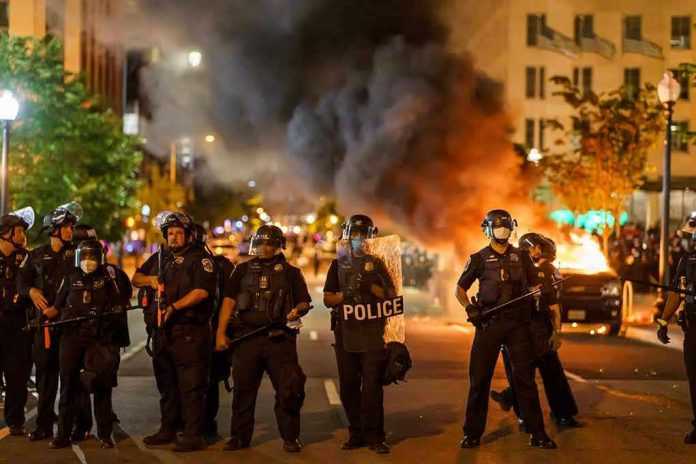
The 2026 draft budget was supposed to be just another stack of numbers. Instead, protesters and opposition parties accused it of masking rampant graft and serving entrenched interests behind a wall of fiscal jargon. When tens of thousands poured into Sofia and cities across the country, the government tried a classic technocrat maneuver: withdraw the budget, hope tempers cool, move on. The crowds answered with a blunt message that should resonate with every taxpayer everywhere: the problem was not one bill, it was the system.
Why Bulgarians Stopped Believing Their Own Institutions
Bulgaria is the European Union’s poorest member state and one of its worst performers on corruption perception, a combination that would test the patience of any conservative voter who plays by the rules and expects others to do the same. For more than a decade, Bulgarians have cycled through protest waves, caretaker cabinets, and snap elections, with a “spiral of elections” replacing the stability that conservative common sense prizes. Trust in government and parliament now sits at what local sociologists call historic lows.
The current drama did not appear from nowhere. Long‑time power broker Boyko Borissov and his GERB party dominated much of the past decade, yet stable coalitions proved elusive and reform shallow. Newer formations like the centrist, anti‑corruption “We Continue the Change” tried to break the mold, but fragmented parliaments and oligarchic networks blunted their impact. When the Zhelyazkov cabinet walked in promising governance, many Bulgarians heard a familiar script: temporary faces, permanent system. The draft budget simply confirmed their suspicion that the same insiders still held the pen.
The Collision Of Euro Adoption, Inflation Fears, And Street Power
Timing turned a bad budget into a perfect political storm. Bulgaria is scheduled to adopt the euro on 1 January, a milestone that should signal fiscal responsibility and long‑term planning. Instead, many citizens feared the change would mean price spikes on everyday goods, just as they had seen or heard about elsewhere in Europe. When people already suspect that politicians loot the state, they naturally assume elites will use euro adoption as camouflage for a fresh round of quiet mark‑ups and sweetheart deals.
President Rumen Radev read the mood and did something many heads of state avoid: he openly sided with the crowds and urged the government to step down to clear the way for early elections. That move undercut whatever democratic mandate the cabinet could still claim, showing how far institutional trust had eroded. From a conservative standpoint, this is the worst of both worlds: a state too weak to enforce accountability on its own, and too politicized for its own president to stand above the fray. When the president reinforces the street rather than institutions, you know those institutions have failed at their basic job.
What Resignation Really Changes — And What It Does Not
On paper, the outcome looks neat: the government resigns, parliament accepts, the president installs a caretaker cabinet, and Bulgarians head into yet another snap election. Opposition leader Assen Vassilev hailed the resignation as “the first step towards transforming Bulgaria into a normal European state” and called for genuinely free and fair elections as the next move. That rhetoric fits the aspirations of many Western conservatives: transparent rules, honest budgets, predictable institutions.
Experience, however, suggests caution. Previous protest cycles in 2013 and 2020 toppled cabinets, reshuffled coalitions, and produced new faces promising renewal, yet underlying corruption patterns largely survived each storm. Street energy can remove governments; it cannot, by itself, reform courts, clean up procurement, or break quiet deals between business and politics. American conservatives who value limited but strong government will recognize the trap: ousting one set of politicians means little if the bureaucracy, judiciary, and party financiers remain untouched.
The Lesson For Democracies That Think “It Can’t Happen Here”
Bulgaria’s crisis may feel distant, but the underlying pattern is painfully familiar across the democratic world. When ordinary working people see stagnant incomes, rising prices, and a political class that constantly asks for “just a little more patience,” while insiders keep winning, they eventually turn away from polite channels. Bulgarians of all ages, backgrounds, and religions took to the streets, many holding signs that read simply, “I’m fed up!” That is not ideology; that is exhaustion.
For conservatives, the Bulgarian story vindicates an unfashionable point: corruption is not a side issue. It is regime‑level. A government that treats budgets as instruments of quiet self‑dealing destroys the social contract that makes limited government possible. Bulgaria’s entire cabinet just paid the price for forgetting that very basic rule. Other democracies can either learn from that, or wait until their own voters shout the same words Bulgarians have chanted for weeks: “Resign.”
Sources:
Bulgarian government resigns after mass anti-graft protests (NBC/AP)
Bulgaria’s prime minister resigns after mass protests (Le Monde)
Bulgaria: New snap election likely as prime minister resigns amid mass protests (Stratfor/Worldview)
Bulgaria’s entire government resigns after mass protests over corruption (AOL)