A pop star’s spontaneous reaction to an unfamiliar cultural chant at Coachella ignited a manufactured media firestorm that reveals more about America’s broken discourse than about any real controversy.
Story Snapshot
- Sabrina Carpenter paused her Coachella set after a fan performed a traditional Arab celebration chant, expressing confusion before continuing the show
- Right-wing outlets framed the moment as an anti-woke victory while progressive critics accused the pop star of cultural insensitivity
- The incident generated 50 million views and a brief social media storm before fading completely within weeks
- Fact-checkers determined the “woke meltdown” narrative was exaggerated, with backlash representing a tiny fraction of Carpenter’s fanbase
Viral Clip Sparks Manufactured Outrage
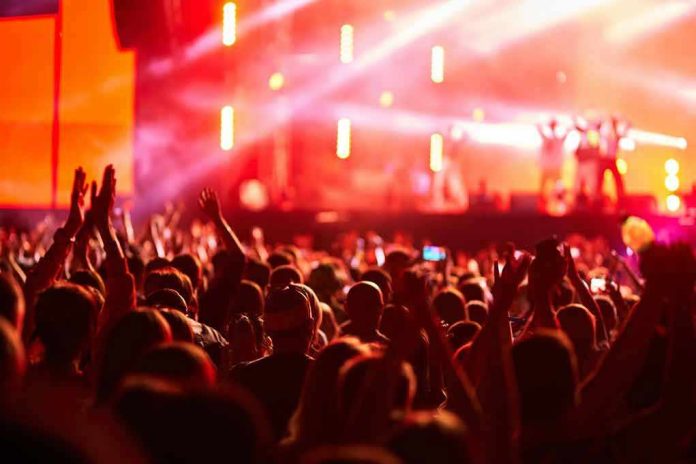
Sabrina Carpenter’s April 11, 2025, Coachella performance became national news after a fan performed zaghrouta, a high-pitched ululation common in Arab and Middle Eastern celebrations. Carpenter paused mid-song during “Please Please Please,” visibly startled, and said “I don’t like it,” “That’s your culture?” and “This is weird” before resuming. The clip uploaded to TikTok hours later amassed five million views by noon the next day. Within 48 hours, opposing media ecosystems transformed a fleeting moment of confusion into another culture war battleground, demonstrating how easily authentic human reactions get weaponized for clicks and political point-scoring.
Background of Traditional Practice and Pop Star
Zaghrouta originates from Bedouin and Levantine cultures including Lebanon, Palestine, and Egypt, traditionally used at weddings, celebrations, and protests. Diaspora fans occasionally bring this cultural expression to Western events like Coachella, which drew 125,000 attendees to its 2025 Weekend 1 festival in Indio, California. Carpenter rose to fame through Disney’s Girl Meets World before evolving into a provocative pop act with hits like “Espresso.” Her 2024-2025 tour emphasized fan interaction, and she was headlining Coachella for the first time. The unnamed fan, identified as LA-based Arab-American through social media posts, intended the vocalization as celebratory excitement during the high-energy set.
Media Exploitation Overshadows Reality
Right-wing outlets including OutKick and Daily Wire immediately framed Carpenter as “owning” a fan and rejecting “woke” cultural demands, positioning her as an anti-PC hero. Progressive critics on TikTok generated over one million posts with the hashtag #SabrinaZaghrouta, accusing her of xenophobic microaggression. Yet the actual backlash represented a niche response—100,000 posts against Carpenter’s 10 million-plus fanbase and 50 million Instagram followers. Carpenter herself posted on April 12, 2025: “Love all my fans, even the loud ones. Wasn’t hating, just startled!” She later reconciled with the fan through direct messages. This pattern reflects a familiar problem: media outlets and online activists manufacture controversy from ambiguous moments to serve predetermined narratives, leaving ordinary Americans exhausted by constant manufactured outrage.
Lasting Impact Proves Minimal
The incident’s actual consequences were negligible. Carpenter’s Spotify streams increased 15 percent in the immediate aftermath, and her 2025 album Short n’ Sweet sold over two million units. Two boycott petitions gathered only 10,000 signatures combined before fizzling out. By Coachella’s Weekend 2 on April 19, 2025, Carpenter performed again and incorporated a zaghrouta tutorial as a joke, earning crowd cheers. Cultural studies professor Suad Joseph from UC Davis noted the moment “highlights diaspora integration tensions” where traditional expressions get misunderstood as strange rather than celebratory. Music critic Anthony Fantano called the reaction “overblown by outrage merchants.” Fact-checkers at Snopes rated the viral claims “mostly true but exaggerated meltdown,” confirming quotes but debunking any sustained controversy.
One year later, the incident exists only in archived “Coachella controversies” lists, demonstrating how quickly manufactured scandals disappear once they stop generating clicks. The Arab-American community itself showed mixed reactions, with some expressing cultural pride while others dismissed the moment as harmless fun. The episode serves as another reminder that in 2026, too many media outlets and political operatives profit from dividing Americans over trivial incidents rather than addressing substantive challenges facing working families. Whether on the left or right, citizens increasingly recognize that the real problem isn’t pop stars reacting spontaneously onstage—it’s an entire apparatus designed to keep us angry at each other instead of focused on the systemic failures of those actually running the country.