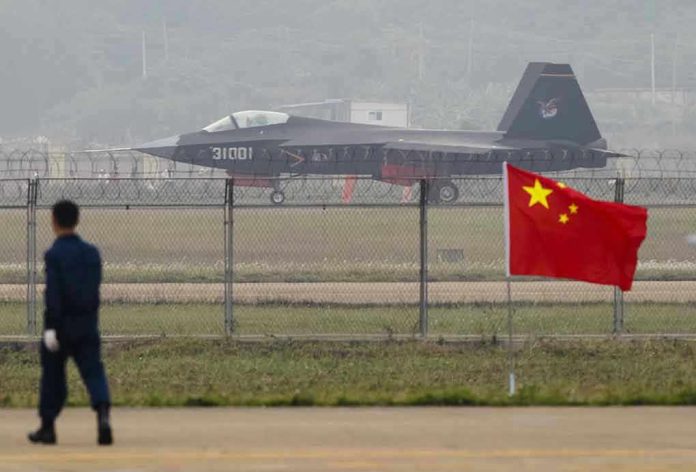
China launched its largest-ever military drills around Taiwan in direct defiance of Trump’s administration, testing America’s resolve while threatening our democratic ally with unprecedented live-fire exercises and simulated blockades.
Story Highlights
- China conducted “Justice Mission 2025” drills with 10 hours of live-fire exercises and 27 rocket launches targeting Taiwan
- Beijing explicitly warned against U.S. and Japanese intervention for the first time in military exercises
- Trump administration’s mixed signals include $11.1 billion arms sales while removing Taiwan from naval exercises
- Drills represent escalation from symbolic shows of force to actual blockade rehearsals threatening global trade
China Tests America’s Red Lines With Record Military Aggression
China’s People’s Liberation Army Eastern Theater Command launched “Justice Mission 2025” on December 29, 2025, encircling Taiwan with the most aggressive military exercises in decades. The two-day operation featured nearly 10 hours of live-fire drills, approximately 27 rocket launches into waters surrounding the island, and unveiled new amphibious assault vessels. This represents Beijing’s boldest challenge yet to American influence in the Pacific, directly testing Trump’s commitment to Taiwan’s defense.
Simulated Blockades Signal Dangerous Escalation Beyond Symbolic Posturing
Unlike previous exercises that served primarily as political theater, these drills included actual blockade simulations and rehearsals for strikes on sea and air targets. Military analysts identified “five red flags” indicating China moved beyond shows of force to testing real operational capabilities for isolating Taiwan. The drills disrupted shipping lanes in the Taiwan Strait, which handles over 50% of global maritime trade, demonstrating China’s willingness to weaponize economic chokepoints against democratic nations.
Trump Administration Sends Conflicting Messages on Taiwan Defense
The Trump administration’s response revealed concerning inconsistencies that may embolden future Chinese aggression. While approving $11.1 billion in arms sales to Taiwan that triggered Beijing’s military response, the administration simultaneously removed Taiwan from participation in RIMPAC naval exercises through National Defense Authorization Act provisions. This mixed messaging undermines deterrence when clear strength is needed most. China’s explicit targeting of “external intervention” marks the first time Beijing directly warned against American involvement in Taiwan’s defense.
Taiwan’s government condemned the exercises as “aggressive and destabilizing normalization of coercion,” raising alert levels as J-16 fighter aircraft conducted incursions into the island’s defense zones. The drills sparked “strong resentment” among Taiwan’s population, who understand these rehearsals represent genuine preparation for invasion rather than empty threats. President Lai Ching-te’s administration faces increasing pressure to strengthen defenses while maintaining hope for continued American support.
Economic and Strategic Implications Threaten American Interests
China’s normalization of large-scale military coercion around Taiwan poses direct threats to American economic and security interests. Taiwan produces the majority of the world’s advanced semiconductors essential for American technology and defense systems. Any successful blockade would cripple global supply chains and hand Beijing leverage over critical industries. The exercises also test whether America will honor commitments to democratic allies facing authoritarian aggression, setting precedents for future conflicts worldwide.
The timing coincides with heightened tensions following similar patterns seen after Nancy Pelosi’s 2022 Taiwan visit and President Lai’s 2024 inauguration. However, experts warn these latest exercises represent qualitative escalation rather than repetitive posturing. Beijing’s willingness to conduct live-fire exercises while explicitly deterring American intervention signals dangerous confidence in challenging U.S. naval supremacy in the Pacific, potentially miscalculating American resolve under new leadership.
Sources:
Taiwan’s Response to China’s Military Exercises
Regional Analysis of China-Taiwan Military Tensions
Trump Administration Taiwan Policy Shifts