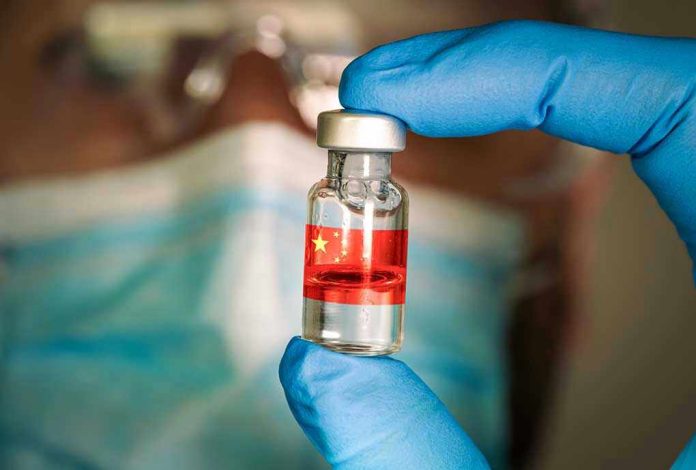
A new federal case suggests America’s food supply may be the next quiet battlefield in China’s campaign to weaken the United States from within.
Story Snapshot
- Federal authorities charged another Chinese-linked researcher with allegedly smuggling crop-harming biomaterial into the United States.
- The case raises alarms about foreign attempts to target America’s farms, food security, and economic stability.
- Critics say Washington’s past globalist and “woke” priorities left critical infrastructure like agriculture dangerously exposed.
- Trump’s renewed focus on border security, China, and national sovereignty puts these threats back under serious scrutiny.
Alleged Smuggling Plot Targets America’s Food Supply
Federal investigators recently arrested another Chinese-affiliated researcher accused of attempting to bring crop-harming biological material into the United States, adding to a troubling pattern of cases tied to China’s scientific community and American agriculture. According to charging documents, the individual allegedly tried to move specialized biomaterial with potential to damage or manipulate U.S. crops, bypassing disclosure rules and security protocols. Prosecutors argue that this material, in the wrong hands, could be used to disrupt food production or undercut domestic farmers’ livelihoods.
National security officials have warned for years that America’s food supply is a soft target, easier to infiltrate than hardened military bases or energy systems, yet just as critical to national strength. By focusing on universities, research labs, and high-tech agricultural firms, foreign actors can quietly siphon off know-how or introduce harmful agents with relatively low visibility. The latest arrest fits that concern, highlighting why agricultural research facilities are now treated much more like strategic assets than ordinary academic departments.
How Past Weakness on China and Borders Opened the Door
For much of the last two decades, Washington and corporate elites embraced the idea that deep economic integration with China would produce stability and mutual benefit, even as evidence of theft, espionage, and coercion continued to stack up. Lenient visa policies for researchers, minimal scrutiny of joint research projects, and a near-obsession with global partnerships allowed foreign operatives to exploit American openness. Agricultural biotechnology, seed genetics, and crop resilience data became prime targets, with rural America paying the hidden price.
Border and customs enforcement also suffered from years of mixed priorities, as resources were diverted to support expansive social agendas and complex regulatory schemes while basic screening functions lagged. Agents on the ground have long complained that they are expected to do more with less, even as the volume and sophistication of biological materials moving through airports and ports increased. The current case underscores how dangerous that imbalance can be when adversarial regimes see opportunity in America’s complacency and bureaucratic distractions.
Trump’s Security-First Pivot on Agriculture and China
Trump’s return to the White House has brought a renewed focus on national sovereignty, supply-chain security, and the strategic value of American farms. During his first term, the administration highlighted the importance of agricultural biotechnology and rural infrastructure as national assets, not mere economic footnotes. That mindset continues into 2025, with a sharper emphasis on screening foreign research partnerships, restricting sensitive lab access, and tightening controls on biological imports linked to hostile or untrustworthy jurisdictions.
Conservative lawmakers and policy experts now argue that agricultural security must be treated on par with energy independence and border enforcement. They call for mandatory security reviews of foreign-born researchers working on high-value crops, tougher penalties for undeclared biomaterials, and rapid information-sharing between USDA, DHS, and intelligence agencies. Supporters frame these measures as common-sense steps to protect farmers, consumers, and the broader economy from deliberate sabotage or reckless experimentation by foreign powers aligned against American interests.
What This Means for Farmers, Families, and Constitutional Principles
For everyday Americans, especially those in farm country, the alleged smuggling of crop-harming biomaterial is not an abstract geopolitical game; it is a direct threat to livelihoods and family stability. Price spikes from damaged harvests hit grocery budgets, while lost exports devastate rural communities already squeezed by years of bad trade deals and rising input costs. When foreign actors attempt to manipulate the food chain, they are attacking the economic backbone that sustains small towns, churches, and family-owned operations across the heartland.
Conservatives see in this case a stark reminder that a nation unable or unwilling to control its borders, guard its research, and confront hostile regimes will inevitably sacrifice freedom to crisis management and emergency powers. Securing agriculture against foreign biological threats supports limited government by preventing the kind of chaos that invites heavy-handed federal intervention later. By demanding tough enforcement and serious accountability now, patriotic voters aim to defend both their dinner tables and the constitutional order they cherish.