Three camouflaged gunmen launched a brazen daylight assault on Israel’s Istanbul consulate, turning a bustling business district into a warzone and exposing the volatile flashpoint where Turkey’s rising anti-Israel sentiment meets hard reality.
Story Snapshot
- Three armed attackers in camouflage opened fire on Israel’s consulate in Istanbul’s Levent district on April 7, 2026, sparking a ten-minute gunfight with Turkish police
- One attacker died at the scene while two others were wounded and detained; two Turkish police officers sustained light injuries during the exchange
- No Israeli diplomats were present or harmed as the consulate had been unmanned for months amid escalating regional tensions
- The attack marks a dangerous escalation from previous symbolic protests near Israeli sites, involving direct combat with rifles rather than warning shots
- Turkish authorities launched an immediate investigation while the incident deepens already strained Turkey-Israel relations fueled by President Erdogan’s Gaza criticism
When Protest Becomes Armed Assault
The attackers arrived by car around midday in Levent, a densely populated business hub housing international firms and thousands of workers. Armed with rifles and long-barreled weapons, they targeted the high-rise building where Israel’s consulate occupies one or two floors. Witnesses reported the gunmen attempted to access the seventh floor, suggesting coordination and intent far beyond symbolic gestures. Turkish police responded within minutes, engaging in a fierce firefight that lasted approximately ten minutes before neutralizing all three assailants. The rapid response prevented what could have become a hostage situation or worse.
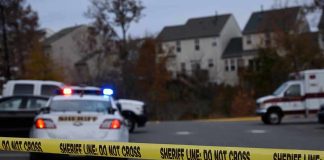
Istanbul Governor Davut Gül confirmed the attackers used rifles specifically to target the consulate, while Interior Minister Mustafa Çiftçi revealed authorities had identified the assailants, with two possibly being brothers. The area was immediately sealed as the Istanbul chief public prosecutor’s office launched an investigation with assigned prosecutors arriving on site. Reuters footage captured the chaos, showing a bloodied individual on the ground and the aftermath of urban combat in a neighborhood typically filled with office workers during lunch hours.
An Empty Target With Symbolic Weight
The consulate stood unmanned by Israeli diplomats at the time of attack, staffed primarily by local employees. This absence reflects months of elevated security concerns tied to regional strife and Turkey’s increasingly hostile rhetoric toward Israel. President Recep Tayyip Erdogan recently condemned Israel’s Gaza operations as unlawful and meaningless, contributing to a climate where anti-Israel sentiment festers publicly. The attackers either didn’t know or didn’t care that no Israeli officials would be present, suggesting the building itself carried sufficient symbolic value to justify the assault.
This incident diverges sharply from previous episodes in 2024 and 2025 when individuals fired shotguns into the air near Israeli sites as protests, resulting in quick arrests but no casualties. Those were theatrical displays of anger. This was combat. The use of rifles, military-style camouflage, and attempted building entry demonstrates premeditation and willingness to kill, marking a threshold crossing in how Turkey’s domestic frustrations with Israeli policy manifest in violence. The two wounded police officers paid the price for standing between rage and its intended target.
Diplomatic Fallout and Security Realities
Israel’s Foreign Ministry acknowledged awareness of the incident and launched its own investigation, though official comments remained sparse. The attack underscores a brutal reality for diplomatic missions operating in hostile environments: even when staff evacuate, the buildings remain lightning rods. Local Turkish employees working at the consulate now face heightened vulnerability, caught between their employment and their nation’s political currents. Turkish authorities labeled the attackers terrorists, a designation that carries weight but leaves questions about affiliations, funding, and whether this represents an isolated cell or part of broader networks.
The broader implications ripple outward. Diplomatic facilities worldwide will reassess security protocols, particularly in regions where Middle East tensions inflame local populations. Turkey’s NATO membership adds another layer of complexity, as an attack on Israeli interests within a NATO nation tests alliance dynamics already strained by Ankara’s pivot toward independent foreign policy. Short-term, expect heightened security at diplomatic sites and potential travel alerts. Long-term, this assault could accelerate the deterioration of Turkey-Israel relations, fuel reciprocal measures, and embolden those viewing violence as legitimate protest.
When Rhetoric Meets Reality
Al Jazeera reporter Sinem Koseoglu noted that attackers were quickly eliminated, emphasizing the vulnerability of local staff despite the absence of Israeli diplomats. Reports from Turkish outlets Haberturk and CNN Türk about the seventh-floor access attempt suggest the attackers possessed specific intelligence about the consulate’s layout. Whether this came from public sources or inside assistance remains under investigation. The discrepancy in early reports about fatality counts reflects the fog of initial reporting, but official Turkish statements from governors and ministers provide the most authoritative account: three attackers engaged, one killed, two wounded and captured, two police lightly injured.
This attack reveals what happens when political rhetoric creates permission structures for violence. Erdogan’s inflammatory language about Israel provides moral cover for those willing to translate words into bullets. The attackers likely believed they were striking a blow for Gaza, for Palestine, for justice as they understood it. Instead, they wounded Turkish police officers defending an empty building and ensured their own death or imprisonment. That’s the cruel arithmetic of political violence dressed as righteousness. The consulate remains standing, its symbolic weight undiminished, while Turkish investigators piece together how three men decided this was their contribution to a conflict thousands of miles away.
Sources:
Shots outside Israel’s Istanbul consulate, 2 police officers wounded: media – JFeed
Israeli consulate Istanbul shooting deaths – The Independent
Shots fired outside Israel’s Istanbul consulate, 2 police officers wounded – The Straits Times
1 gunman shot dead outside Israeli consulate in Istanbul, 2 other gunmen injured – ABC News
Shots fired outside Israel’s consulate, one attacker dead – Bluewin