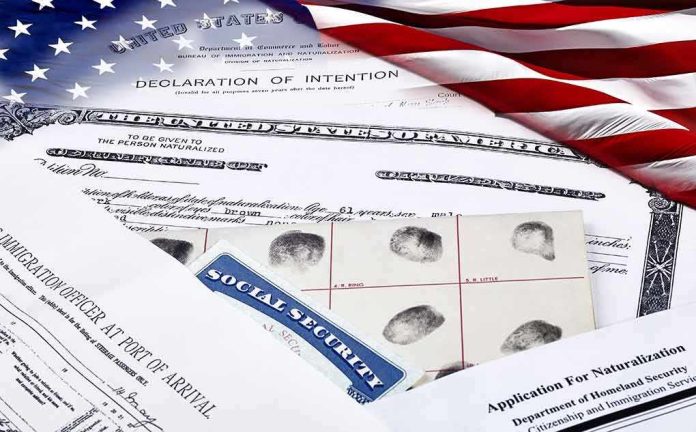
Thousands of Americans are now paying money and filling forms just to stop being American on paper.
Story Snapshot
- Formal loss of U.S. citizenship has jumped from a few hundred cases a year to several thousand.
- The main push is not hate for America, but taxes, banking headaches, and legal red tape.[1][2]
- Most who renounce live abroad, often as dual citizens or “accidental Americans” caught in U.S. tax rules.[1][6]
- The decision is permanent, high‑stakes, and reveals how D.C. treats citizens as tax residents first, people second.[6]
Thousands are walking away from the blue passport
Before 2009, only about 200 to 400 people a year formally gave up U.S. citizenship.[1] By 2020, that number hit 6,705 cases in a single year, and the totals have stayed in the thousands since then.[1][2][6] Government tables group both renunciation and other ways of losing nationality, but the trend line is clear: more Americans are deciding that keeping the passport is not worth the strings that come attached.[6]
That rise may sound small in a nation of over 330 million people. Yet it matters because renunciation is hard, expensive, and final. People must appear at a United States embassy or consulate, swear an oath, and accept that they may need a visa just to visit family in the future.[6] When someone goes through all that, it usually reflects real pressure, not a passing mood or a social media stunt.
Tax law turned citizens abroad into compliance targets
The United States is one of only a couple of countries that taxes its citizens on worldwide income, no matter where they live.[1][2] An engineer in Germany, a teacher in Canada, or a retiree in France still deals with the Internal Revenue Service every year, even when they already pay full taxes where they live.[1][2] They juggle complex forms, foreign account reports, and the fear of big penalties for honest mistakes.[1][2]
The Foreign Account Tax Compliance Act, passed in 2010 and fully enforced starting in 2014, supercharged that pressure.[1][2][4] This law forces foreign banks to identify and report United States citizens to the Internal Revenue Service or face steep fines.[1][2][4] Many banks responded in the most predictable way: they simply stopped wanting American customers.[2][4] People abroad reported losing local accounts, facing blocked investments, or being turned away for mortgages because their blue passport made them “too risky.”[2][4]
Who is giving up citizenship, and why now
Most renunciations do not come from people packing bags in Ohio and storming out of the country. Reports say the typical case is a long‑term expatriate, a dual citizen, or an “accidental American” who may have left as a child or was born abroad to a United States parent.[1][6] Many discover their United States status only when a foreign bank flags them, and they suddenly face years of back tax filings and account disclosures.[1][6]
Law firms that handle these cases describe a common theme: this is usually a practical decision, not a protest sign.[2] Clients feel trapped between two tax systems, blocked from normal banking, or shut out of full rights in the country where they actually live.[2] Some countries do not allow dual citizenship or limit public roles for dual nationals, so Americans who want to serve in local government or fully join their adopted country sometimes must choose and drop the United States passport.[2]
Politics, principle, and the quiet protest vote
Politics is not the main driver in most reports, but it is part of the story. Some people renounce to send a message about polarization, foreign policy, or a sense that Washington no longer represents their values.[1][2] One Canadian example highlighted by media links renunciation talk to anger over United States politics, not tax forms.[2] No one has solid data on how large this protest group is, but the motives appear real for that slice of renunciants.
🧵1/8 Renouncing US citizenship just got 80% cheaper.
The fee dropped from $2,350 to $450 in April 2026 — the biggest change for "accidental Americans" in a decade.
But here's what the $450 doesn't buy you 🧵#AccidentalAmerican #citizenshipbasedtaxation #expattax— Ranjan Soni (@_RanjanSoni) June 12, 2026
From a conservative, common‑sense view, this mix of motives tells its own story. When ordinary families abroad hire lawyers, pay thousands of dollars in fees, and cut formal ties just to escape a web of rules, that signals overreach, not healthy governance.[1][2][6] A nation that once drew people in with freedom and opportunity now risks pushing some of its own away with paperwork, penalties, and a tax system that treats presence on a birth certificate like a lifelong revenue claim.
Sources:
[1] Web – UPDATE: Thousands of Americans giving up their citizenship…
[2] Web – Report: More Americans Giving Up U.S. Citizenship
[4] Web – Report Finds More Americans Are Renouncing Their U.S. Citizenship
[6] Web – Renounce or lose your citizenship – USAGov