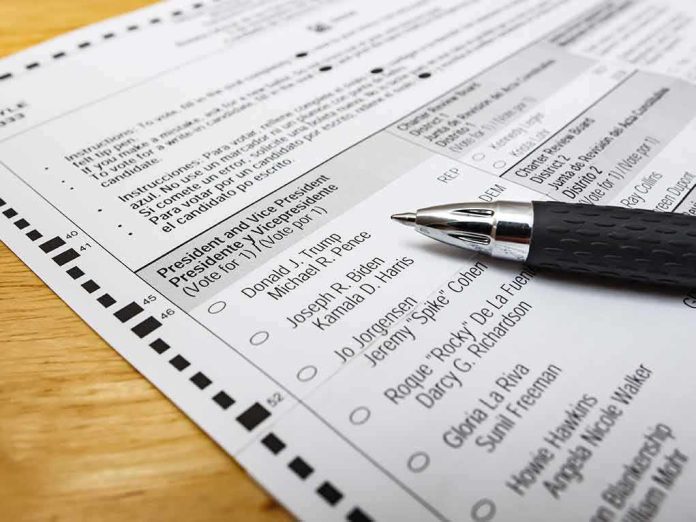
New Jersey says a software failure put about 6,600 noncitizens on voter rolls, and the state is now scrubbing the list while steering those people to free legal help.
Story Snapshot
- Officials blame a software and vendor chain for improper registrations, not intent.
- About 6,600 noncitizens were added between mid-2023 and mid-2024, then flagged for removal.
- The state points affected residents to existing, income-based civil legal aid.
- Critics question taxpayer costs and election confidence while fixes roll out.
What New Jersey Says Happened
State election officials reported that a software process malfunctioned and enrolled noncitizens as voters during routine agency interactions. The state says the error began in June 2023 and lasted roughly a year. Officials describe the cause as a mix of system logic and vendor or prior administration process gaps, not a policy to register noncitizens. They say they are now canceling ineligible registrations, sending notices, and tightening checks to block a repeat. An arrest or charge is not at issue here; this is an administrative failure claim.
State leaders also say affected people can seek legal advice, since contact from an election office can feel risky for a noncitizen. They frame this as basic due process. Canceling an improper registration can trigger questions about records, prior filings, or immigration status exposure. Officials argue that offering civil legal guidance lowers the risk of new errors and helps people respond to notices promptly and correctly. That is a narrow, practical case: fix the rolls, then help people handle the paper trail.
What The Legal-Aid Offer Really Is
New Jersey is not building a new legal program from scratch for this event. The state already funds and routes residents into a standing civil legal-aid network. Legal Services of New Jersey coordinates that system and provides free help to low-income residents in civil matters, including immigration topics. The state’s “find legal aid” page directs people to the same statewide hotline and intake, again based on income, not citizenship. The Office of New Americans points immigrants to those channels as standard practice.
These sources show a live, statewide legal-aid lattice with immigration capacity. The Legal Services of New Jersey site lists immigration help and intake options that already exist every day, not just after this incident. Federal court and state directories describe the same setup, emphasizing free or low-cost civil legal help for low-income New Jerseyans. That matters for taxpayers. If officials route people into a standing system, it is not a new blank-check program. It is a surge in demand handled by the existing framework.
The Scale, The Fix, And The Trust Problem
About 6,600 improper registrations is not a rounding error. Voters want to know how many notices went out, how many cancellations took effect, and how the system flags future mismatches. The state says it is removing ineligible records now and hardening the process. The public still deserves a clear after-action report. A full audit would show the rule that failed, the vendor steps, logs, and when alerts fired. That plain report builds trust without spin.
Critics argue that taxpayers should not subsidize legal advice for noncitizens who ended up on the rolls, even by mistake. The counter is simple common sense. If the government creates the problem, the government should help unwind it fairly and fast. The cleanest route is case-by-case guidance through the existing civil legal network. That approach aligns with due process and protects eligible voters too, because a careful cleanup reduces false positives and future errors.
Conservative Lens: Competence First, Politics Second
Election integrity starts with precision, not press releases. The priority is an airtight fix, transparent documentation, and strict verification at every agency touchpoint. The state’s move to cancel improper registrations is necessary and should be swift. The legal-aid routing should remain focused, income-based, and time-limited to this cleanup. Lawmakers should demand a timeline, metrics on removals, and evidence that the technical patch holds across all intake systems and vendors.
https://t.co/adqh4aTfFN New Jersey Offers Taxpayer-Funded Legal Services To Noncitizens Improperly Registered To Vote
— SASSYCHICK (@KT07500539) August 2, 2026
Three steps would quiet the noise. First, publish the technical root cause, with the exact rule that misfired and the safeguards now in place. Second, disclose cleanup numbers weekly until completion: notices sent, responses, cancellations, and any appeals. Third, require a cross-agency drill to test the fix before the next election deadline. That is the competence play. It respects taxpayers, protects legal voters, and gives noncitizens caught in the net a clear, lawful path to correct the record.
Sources:
immigrationlawhelp.org, njd.uscourts.gov, nj.gov