Spain says at least 48,300 migrants who rushed into Ceuta have already turned around and gone back to Morocco, but how and why that happened tells a bigger story than the headline number.
Story Snapshot
- About 60,000 people reportedly entered Ceuta from Morocco in just over a day.
- Spain’s Interior Ministry says at least 48,300 of them have already returned to Morocco.
- Most returns are described as “voluntary,” but happen under heavy police and military pressure.
- The pattern fits earlier Ceuta crises, where most migrants are pushed back fast and quietly.
A city of 84,000 suddenly faces 60,000 new arrivals
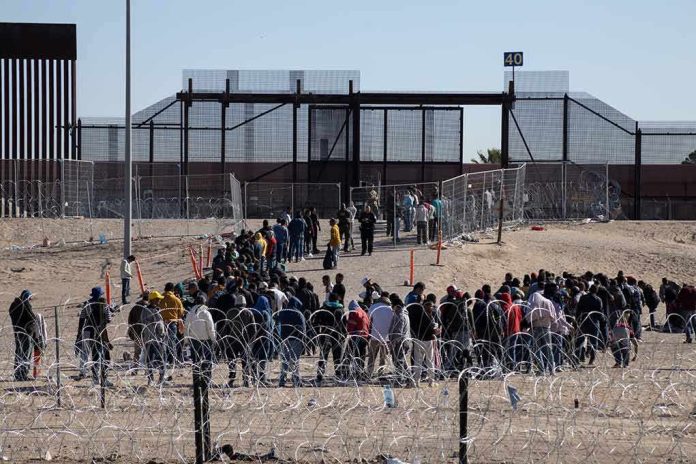
Ceuta is a tiny Spanish city on the African coast, ringed by fences and breakwaters, with about 84,000 residents. In a single 24-hour window, local and national authorities say somewhere between 40,000 and 60,000 migrants poured in from Morocco by land and sea. One civil guard source put the number at roughly 49,000, almost overnight. That scale matters: it turned Ceuta from a border town into the eye of a storm, and forced Madrid to move from talking about migration in theory to confronting it in the streets.
Migrants did not sneak in ones and twos. They climbed fences, walked along the breakwater, or swam around the barriers. Videos show crowds overwhelming police lines and rushing the shoreline. Reporters on the ground describe bodies in the water and at least 18 deaths tied to the surge. This was not a trickle of asylum seekers; it was a mass movement shaped by smugglers, court rulings, and politics on both sides of the border. That chaos set the stage for fast, large-scale returns.
Spain’s Interior Ministry starts counting people going back
By Friday afternoon, the Spanish Interior Ministry began releasing tallies of how many people had left Ceuta for Morocco again. One update said more than 37,500 people had gone back by mid-afternoon. Later, the ministry told reporters that at least 48,300 people who had crossed into Ceuta since Thursday had returned to Morocco by about 6 p.m. local time. European Union officials echoed the message, stressing that none of the migrants had yet moved onward to mainland Spain or other European Union states.
Local outlets carried similar figures: some reported that nearly half of the estimated 60,000 entrants had already returned. The Guardian’s live blog, citing Interior Ministry comments, spoke of 25,000 people who “voluntarily returned” on Friday, and then updated that total to 37,500 as the day went on. A Danish outlet summarized the official story bluntly: about 60,000 entered, and around 48,000 had gone back by the next day. The math points to a clear line: Madrid wants the public to see a crisis that swelled fast, then reversed just as fast.
‘Voluntary’ return under pressure and the conservative lens
Spanish officials and some media call these movements “voluntary returns.” Technically, many migrants walked themselves back across the breakwater or were bused to the fence and crossed on foot. But the context matters. Spain deployed troops, reinforced fences, and announced that the “outcome will be return, in accordance with Spanish law.” Morocco and Spain agreed that everyone who entered illegally, including minors, would be sent back. When the state lines up soldiers, police, and readmission deals, “voluntary” looks a lot less like free choice, and more like people accepting the only option offered.
From a common-sense, conservative view, two truths clash here. First, no country can absorb 60,000 border jumpers in 24 hours and stay stable. Order, sovereignty, and the rule of law matter, and Spain’s decision to move people back quickly reflects that. Second, those same fast returns raise hard questions about whether each person had a fair shot to claim asylum or explain their situation. Amnesty International has warned that Ceuta pushbacks often happen without proper hearings. The official 48,300 figure sits right where those two values collide.
Ceuta has seen mass returns before
This is not Ceuta’s first shock. In May 2021, about 8,000 migrants crossed into the enclave over two days after Morocco relaxed border controls during a diplomatic spat. Spain’s government said roughly 4,000 were quickly returned under a readmission deal with Morocco. Later, officials raised that to 5,600 and described “around two-thirds” of arrivals as having been sent back. President Pedro Sánchez promised to “immediately return” all who entered unlawfully, and records show the state largely did just that.
The idea that the current migrant surge in Ceuta is a geopolitical conspiracy orchestrated by Israel to punish Spain is completely false; the crisis stems directly from a Spanish legal loophole and subsequent exploitation by criminal networks. On July 8, 2026, the Spanish Supreme…
— Ayoub Kechchour (אִיּוֹב) (@KECHCHOURAyoub) July 31, 2026
This history matters because it shows a pattern. When a crisis blows up, headlines focus on the dramatic crossings. Within days, most people are either pushed or nudged back over the border. The new 48,300 claim fits the same script, just at a bigger scale. Spain and Morocco again struck quick deals to “urgently” return migrants and “expel” those who had entered illegally. Supporters see this as basic border control. Critics see it as mass disposal of human beings with little real process.
Why the numbers feel squishy but still matter
Even with strong reporting, the exact figures are not tidy. Interior Ministry estimates of crossings range from about 40,000 to 60,000. The 49,000 number comes from security sources, not a formal bulletin. Early return counts jump from 25,000 to 37,500 to at least 48,300 as the day goes on. France 24 and others show similar ballpark figures but stress that authorities are still counting. That is typical in border crises, where people move in and out while officials scramble to keep a running total.
Still, the core story holds. Tens of thousands crossed. Roughly half, and likely more, have already gone back, with Spain claiming at least 48,300 returns by Friday evening. For Europeans worried about border security, that looks like the state regaining control. For anyone focused on migrant rights, it looks like a machine that can take tens of thousands of people, erase them from the territory within hours, and call it “voluntary.” Both readings are grounded in the same set of facts. The real question is which value you put first when you hear that number.
Sources:
insiderpaper.com, reuters.com, nypost.com, pbs.org, euronews.com, youtube.com, bbc.com, en.wikipedia.org, ynetnews.com, instagram.com, aa.com.tr, english.elpais.com, theguardian.com, aljazeera.com, yahoo.com, en.iz.ru