Everyone rushed to declare Oliver Tree dead before the facts had time to land.
Story Snapshot
- Reports named Oliver Tree among six dead after a mid-air helicopter collision in Rio.
- Early claims leaned on attributions to Brazilian police without primary documents.
- Counter posts and a fundraising page raised doubts and called for patience.
- This rush-to-certainty pattern repeats in celebrity tragedies and fuels confusion.
What Was Reported, When, and By Whom
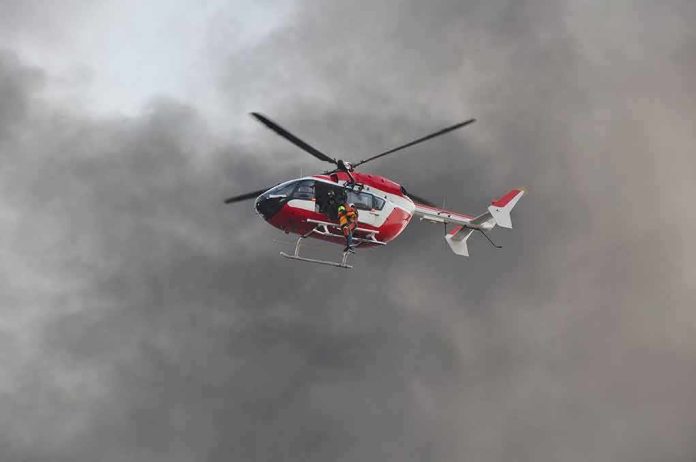
Multiple outlets and social accounts said two helicopters collided over Recreio dos Bandeirantes in Rio de Janeiro, leaving six dead. They named American singer Oliver Tree as one of the victims. Some pieces cited the Civil Police of Rio de Janeiro as their source while repeating the same chain of details. A major entertainment site also framed his death as confirmed and gave his age and location at the time of the crash [9]. One widely shared video used the word “confirmed” in its title and narration [1].
Wikipedia entries changed fast to match the breaking narrative and listed June 14, 2026, as the date of death in Brazil. Edits on a public encyclopedia can reflect news flow, but they do not prove identity in a mass-casualty event. Early copy on fan pages and repost accounts echoed the same claims and images. That echo gives a sense of certainty that may rest on a single report. When many posts share one thin source, the risk of error rises [2].
Why Confusion Took Off So Quickly
Celebrity deaths spread fast because they trigger shock, sadness, and a need to share. Social platforms reward speed and emotion, not caution. A short clip with a strong claim can beat a careful statement by hours. People also trust visual backdrops like police tape or helicopter footage, even when it is generic. When several channels repeat the same line about police confirmation, viewers assume each one checked it. Often they did not. They just reused the same script [1].
Rival posts pulled the other way. A fundraising page said Oliver Tree was hurt by a falling helicopter and was in the hospital, not dead [3]. That claim clashed with the six-dead narrative and created a second wave of shares. Some viewers read the page as a hoax; others saw it as hope. This split is standard in fast crises. People sort into camps based on which first detail they saw and which outlet they trust, then they ignore the rest.
How To Judge “Confirmed” In The First 24 Hours
True confirmation in air disasters usually comes from primary authorities: police, aviation regulators, or medical examiners. They name victims after a formal process that may involve next-of-kin notice and forensic checks. Reporters can cite those agencies, but the gold standard is a named statement, a release, or a briefing on record. Anything else is secondhand. A headline that says “confirmed” without a link to a document or quoted official should set off alarms [1].
Conservative common sense says facts outrank feelings. Wait for evidence you can hold in your hand. A single entertainment site’s piece can be wrong, and a flood of reposts does not make it right. A balanced reader asks: Who said this? Can I read the release? Does the outlet correct fast if wrong? In this case, the strongest articles still leaned on attributed police confirmation without displaying a primary bulletin. That leaves open questions about timing and identity [9].
The Final Act of a Global Odyssey: Oliver Tree Dies at 32 in Rio Helicopter Collisionhttps://t.co/Se7BH0HsZv
— Mr. Perfect (@DS24IN) June 15, 2026
What We Know, What We Do Not, What Comes Next
Here is what stands on firmer ground: Two helicopters collided over Rio, and reports stated six people died. Several outlets named Oliver Tree among those victims, citing local police. Social posts and videos amplified those claims within hours. A fundraiser and some posts challenged the death narrative and claimed survival and treatment. These two paths cannot both be right. Only a formal, on-record statement can close the loop for the public [1].
Readers can keep their footing by using a simple filter. First, rank sources by proximity to the event. Second, check whether they share a primary document. Third, discount emotional framing and stick to names, numbers, and quotes. Fourth, hold your share button until facts age a bit. The truth can breathe if we give it 12 to 24 hours. That habit honors both the victims and the living, and it denies rumor the clicks it feeds on [3].
Sources:
[1] Web – World-Famous Singer Oliver Tree Dies After Mid-Air Helicopter …
[2] YouTube – Oliver Tree KILLED in Rio Helicopter Mid-Air Collision
[3] Web – Oliver Tree – Wikipedia
[9] Web – Actor Christian Oliver dies in Caribbean plane crash with two … – …