The real fight over Trump’s proposed White House ballroom isn’t about chandeliers or square footage—it’s about who, exactly, gets to rewrite the nation’s most protected building.
Story Snapshot
- The U.S. Commission of Fine Arts voted unanimously on Feb. 19, 2026, to approve a new White House ballroom project priced around $400 million.
- Public feedback ran overwhelmingly negative, with reporting citing 99% of roughly 2,000 comments opposed.
- The East Wing was demolished in late October 2025 after earlier messaging suggested the new build would be “near it” rather than replacing it.
- A federal judge temporarily paused work on March 31, 2026, signaling deep skepticism that any statute gives the president the authority claimed.
A Ballroom Becomes a Test of Presidential Power
The Commission of Fine Arts approval landed like a gavel: unanimous, fast, and politically loaded. Trump’s $400 million ballroom concept moved forward on paper even as public comments reportedly piled up in near-total opposition. That mismatch matters because the White House isn’t a private club upgrade; it’s a civic symbol with guardrails built over decades. The moment the East Wing came down, the argument shifted from taste to authority.
Judge Richard Leon’s temporary halt on March 31, 2026 injected the one ingredient Trump’s plan can’t gild over: a legal “show your work” demand. Leon’s reported line—“No statute comes close to giving the President the authority he claims to have”—cuts to the core. This dispute now hinges on process and permission, not applause. Courts don’t grade designs; they grade power, precedent, and whether the rules got followed.
From “Not Touching It” to Demolition and a Bigger Ask
The timeline reads like a renovation that kept growing in the contractor’s notebook. Trump floated the idea in summer 2025. By September, the capacity increased to about 900, a sizable jump that signaled the project’s gravitational pull toward spectacle. The East Wing then got demolished at the end of October, contradicting earlier assurances that construction would sit adjacent rather than replace historic fabric. Once demolition happens, “temporary” promises stop mattering.
Design churn followed. Lead architect James McCrery stepped down in early December 2025 amid reported disputes over additional size increases, and Shalom Baranes took over. That swap tells readers something practical: the client wanted more, and the design team hit a limit. When a project grows while approvals lag, it invites challenges from preservation groups and skeptics who see a moving target. Bigger rooms create bigger legal exposure, too.
Why a Unanimous Commission Vote Still Looks Politically Fragile
The Commission of Fine Arts vote being unanimous sounds definitive until you match it against the composition and the comment record. Reporting described the commission as made up entirely of Trump appointees, including his executive assistant. That fact doesn’t automatically invalidate a vote, but it does weaken public confidence that the review function stayed independent. Conservative voters tend to respect clear lines of authority; they also dislike the smell of insiders grading their own homework.
The 99% opposition figure adds another pressure point. Public comments don’t run the government, and they shouldn’t. But when the gap between citizen response and institutional outcome becomes that extreme, it invites a common-sense question: did the process persuade anyone outside the building? In politics, legitimacy isn’t only legal; it’s also cultural. A project can be lawful yet still corrode trust if it looks insulated from public accountability.
The Design Pitch: “Neoclassical Outside,” Mar-a-Lago Energy Inside
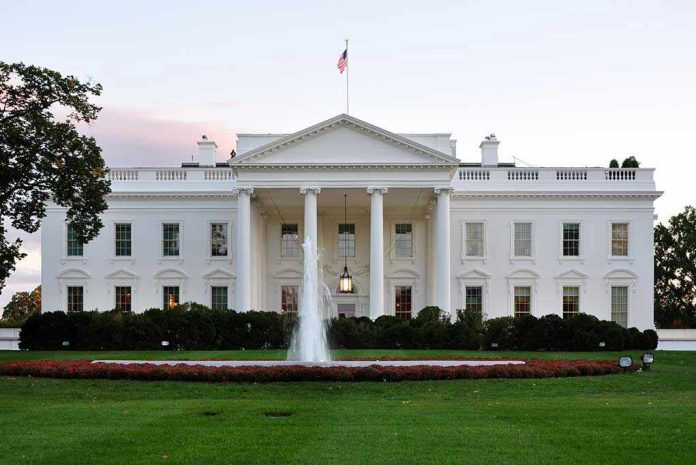
The White House press office said the exterior would remain “almost identical” to the existing neoclassical look, a phrase designed to calm fears of a visual shock. The interior pitch reportedly leans opulent: coffered ceilings, crystal chandeliers, checkerboard flooring. That’s a deliberate contrast—traditional shell, maximalist room. The communications strategy is clear: preserve the postcard image for tourists while transforming the functional heart where modern presidents host donors, diplomats, and state events.
Trump’s long-running desire for a White House ballroom—reported to date back to at least 2010—explains why this plan keeps resurfacing. A ballroom solves a real operational issue: the White House often relies on temporary tents for large events. A permanent venue could reduce logistical headaches. The conservative case for it is straightforward: build once, build durable, stop renting workarounds. The counterargument is equally conservative: don’t bulldoze history because you want a grander party room.
What Happens Next: Courts, Precedent, and a Symbol That Can’t Be Rebuilt
The litigation from the National Trust for Historic Preservation puts the project into a slow, consequential arena where symbolism doesn’t win by itself. If the court ultimately backs a broad view of presidential authority over White House alterations, future presidents of either party could cite that precedent to justify sweeping changes. If the court rejects it, the decision becomes a brake on executive improvisation. Either way, the case will echo beyond this ballroom and into how America protects its own civic landmarks.
The pause also raises the practical question nobody escapes: time and money. A summer 2028 completion target assumes steady work, but legal uncertainty turns schedules into wish lists. The cost already reportedly doubled from early figures, and capacity figures have shifted in public discussion, feeding skepticism that the scope is stable. Americans over 40 know this story from home renovations: once you start “expanding,” the budget rarely shrinks. The difference here is that the invoice, the authority, and the precedent all land on the nation.