A routine Southwest flight turned into a full-scale law-enforcement takedown in the cabin—then the FBI said there was “no credible threat.”
Quick Take
- Southwest Flight 2094 (Nashville to Fort Lauderdale) diverted to Atlanta on March 7, 2026, over a reported “possible security matter.”
- Atlanta police boarded the aircraft and removed and handcuffed an unidentified male passenger before federal agencies took over.
- The FBI later said investigators found no credible threat, but officials have not publicly explained what triggered the diversion.
- Passengers were re-accommodated on another aircraft and arrived in Fort Lauderdale around 3:30 a.m. after hours of delay.
Flight 2094 Diverted to Atlanta After “Possible Security Matter”
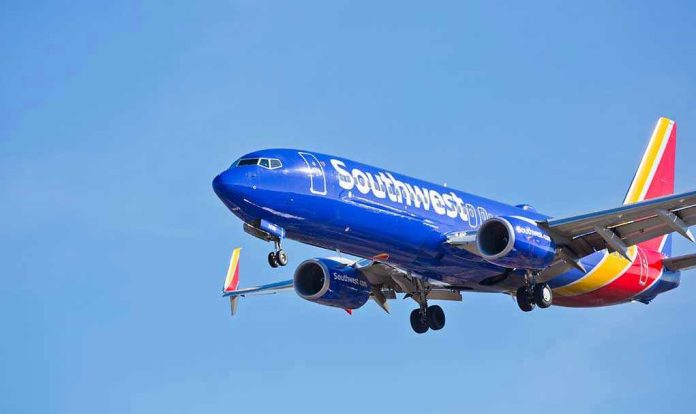
Southwest Airlines Flight 2094, scheduled to fly from Nashville International Airport to Fort Lauderdale–Hollywood International Airport, diverted to Hartsfield–Jackson Atlanta International Airport on Friday evening, March 7, 2026. Officials described the trigger only as a “possible security matter” tied to a passenger. The aircraft landed in Atlanta at about 9:06 p.m. local time, and law enforcement responded immediately after the plane was on the ground.
Atlanta Police Department officers boarded the aircraft and removed a male passenger, placing him in handcuffs. Reporting described officers wearing tactical gear and giving firm commands as they moved through a cramped passenger cabin. For the average American traveler, that kind of response is a gut-level reminder that aviation remains a top-tier security target—and that any perceived threat, even an ambiguous one, is treated with zero hesitation once it’s reported to the cockpit.
FBI: “No Credible Threat,” but Key Details Remain Unreleased
The clearest official conclusion so far is also the most frustrating for passengers: the FBI later stated there was no credible threat. That assessment may reassure the public that investigators did not find an immediate danger to the aircraft or the traveling public. At the same time, officials have not publicly explained what the passenger allegedly said or did, whether any item prompted concern, or whether the incident involved a specific type of threat at all.
That information gap matters because it affects how Americans evaluate risk and how much trust they place in the process. Some social-media posts and captions referenced a “bomb threat,” but at least one outlet noted that claim was not corroborated by authorities. Without a public incident narrative, the public is left with dramatic cabin video and vague descriptions—while the agencies responsible for making the call keep the underlying facts close to the vest.
Why the Response Was So Intense in a Civilian Aircraft Cabin
U.S. aviation security has operated in a post-9/11 framework where “false alarms” are tolerated far more than missed threats, because the downside risk is catastrophic. In practice, that means pilots and airlines treat even uncertain reports as urgent until proven otherwise. Atlanta is also a logical diversion point: it has extensive law-enforcement resources on site, deep operational capacity, and the ability to isolate an aircraft quickly while officers secure the scene.
Inside the cabin, officers’ control tactics are designed to reduce chaos and limit movement while they focus on a suspect. Passengers being ordered into compliance—hands visible, heads down—can look extreme, but it reflects the reality of responding in close quarters where officers cannot easily tell who may be involved. From a constitutional perspective, Americans should still expect accountability and clear post-incident explanations when the government exercises that level of control over innocent travelers.
Passengers Rebooked, but Transparency and Accountability Questions Persist
After the passenger was removed, federal authorities—including the FBI and the Department of Homeland Security—assumed investigative control, according to reporting. Southwest re-accommodated the remaining passengers on another aircraft, and they ultimately arrived in Fort Lauderdale just before 3:30 a.m. The operational disruption is obvious: late-night delays, missed connections, and the personal cost to families and working Americans trying to get home or make obligations.
Limited public information also leaves unanswered questions about outcomes. Current reporting has not clarified whether the removed passenger was charged, released, or referred for evaluation, and no public document has been cited describing the alleged conduct that prompted the diversion. Until officials provide a fuller accounting, this incident will remain a case study in a system that can mobilize overwhelming force in minutes—yet offer only minimal public detail after the fact.
Sources:
No credible threat found after Southwest flight diverted to Atlanta
Southwest flight from Nashville diverted over security scare; FBI finds no credible threat
Fort Lauderdale-bound flight diverts amid security scare; passenger removed