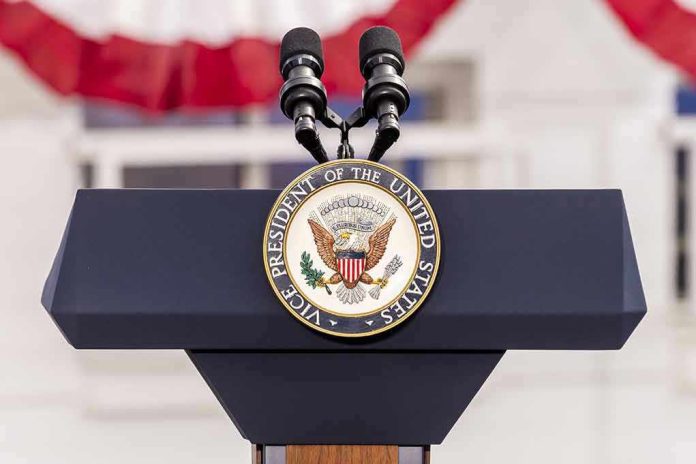
No American vice president or president had ever set foot in Armenia until JD Vance landed in Yerevan this week, shattering a diplomatic barrier that stood for over three decades since Armenian independence.
Story Snapshot
- Vice President JD Vance became the first sitting U.S. vice president or president to visit Armenia, marking a historic diplomatic milestone
- The visit advances Trump administration efforts to broker peace between Armenia and Azerbaijan after decades of conflict over Nagorno-Karabakh
- Vance met with Prime Minister Nikol Pashinyan and planned to visit Azerbaijan the following day, demonstrating balanced engagement
- The administration’s “Trump Route for International Peace and Prosperity” aims to create a major transit corridor connecting the region
- Both Armenian and Azerbaijani leaders now serve on Trump’s expanded “Board of Peace” initiative
Breaking Diplomatic Ground in the Caucasus
Vance arrived in Yerevan following four days at the Milan Winter Olympics with his family, transforming what could have been a simple European trip into a groundbreaking diplomatic mission. The symbolism alone speaks volumes about the Trump administration’s priorities in the Caucasus region. During meetings with Prime Minister Pashinyan, Vance praised Armenia as “one of the oldest Christian cultures in the entire world” and called the prime minister “a great friend of ours and a real ally in peace and development.” Pashinyan responded with optimism, suggesting peace negotiations have reached “very close to that point, if not there yet, of no return.”
The Decades-Long Conflict Over Nagorno-Karabakh
Armenia and Azerbaijan have wrestled over Nagorno-Karabakh for generations, with the mountainous region becoming a flashpoint for ethnic tensions, military confrontations, and massive population displacements. The conflict has created humanitarian crises that previous administrations addressed with statements and condemnations but little direct intervention. Armenian populations fled Nagorno-Karabakh in significant numbers during recent escalations, creating a displaced community desperate for either safe return or permanent resettlement. The terminology itself remains contentious, with Azerbaijani officials disputing even the name “Nagorno-Karabakh” as they assert sovereignty over territories Armenia considers historically and culturally significant.
Trump’s Bold Peace Initiative Takes Shape
The Trump administration has approached this intractable conflict with characteristic ambition, positioning the United States as primary mediator rather than distant observer. In August 2025, Pashinyan signed a White House deal aimed at reopening key transportation routes with Azerbaijan, including commitments toward a comprehensive peace treaty. Foreign ministers from both nations initialed the treaty text, indicating preliminary approval, though formal signatures and parliamentary ratifications remain pending. The administration created what it calls the “Trump Route for International Peace and Prosperity,” a proposed major transit corridor connecting Azerbaijan with its autonomous Nakhchivan exclave, currently separated by Armenian territory.
The Board of Peace Expands Its Ambitions
Both Pashinyan and Azerbaijani President Ilham Aliyev now serve on Trump’s “Board of Peace,” originally designed to oversee the Gaza ceasefire but expanded to encompass this Caucasus conflict. This approach reveals the administration’s preference for high-level engagement and economic incentives over military threats or punitive measures. The strategy makes practical sense: creating economic interdependencies through transportation corridors could discourage future conflicts more effectively than any treaty language alone. However, the approach faces skepticism from Armenian advocacy groups, particularly the Armenian National Committee of America, which argues previous American statements supporting Armenian rights produced no concrete policy actions like UN Security Council resolutions or restrictions on U.S. military aid to Azerbaijan.
Balancing Acts and Regional Power Dynamics
Vance’s planned Tuesday visit to Azerbaijan demonstrates the administration’s commitment to balanced engagement, avoiding any appearance of favoritism that could derail negotiations. The diplomatic choreography matters immensely in conflicts where perceived slights can unravel months of progress. Beyond the immediate parties, regional neighbors Russia, Iran, and Turkey maintain significant interests in the outcome, with Russia particularly invested given its historical influence in the region. A successful U.S.-brokered peace agreement would enhance American influence in the Caucasus while potentially counterbalancing Russian and Iranian power, a strategic win that extends beyond humanitarian considerations.
What Success or Failure Means
The short-term implications appear promising: Vance’s unprecedented visit signals serious commitment that may accelerate treaty ratification in both countries and strengthen Pashinyan’s domestic political position. Long-term consequences reach further. The proposed transit corridor could fundamentally reshape regional trade and connectivity, benefiting both nations economically while creating the kind of mutual dependencies that make future conflicts economically irrational. Yet the humanitarian crisis remains unresolved. Displaced Armenian populations from Nagorno-Karabakh need mechanisms for safe return or compensation, an issue that treaty language must address concretely rather than symbolically. Without resolving displacement and establishing accountability, any peace agreement risks becoming merely a temporary ceasefire rather than lasting resolution.
The Trump administration deserves credit for engaging where others issued only statements. Whether this unprecedented diplomatic effort produces a genuine peace treaty or becomes another footnote in the region’s troubled history depends on details still being negotiated behind closed doors. The fact that an American vice president finally visited Armenia after three decades of independence suggests this administration takes the region seriously. Now comes the harder part: converting historic visits into historic peace.
Sources: