Washington is about to test whether it can turn a toppled dictatorship’s oil into a strategic asset for American drivers without giving away the leverage that brought that regime down in the first place.
Story Snapshot
- The U.S. is preparing to lift additional Venezuela sanctions “as soon as next week” to grease the skids for new oil sales.
- Maduro is gone, but the sanctions architecture largely remains; what changes now is who controls Venezuelan oil and its dollars.
- Washington plans to sell 30–50 million barrels of Venezuelan crude and hold most of the money in U.S. banks under tight conditions.
- Selective relief for traders like Vitol and Trafigura could quietly redraw the global map of who profits from Venezuela’s vast reserves.
Sanctions relief after regime change, not before
U.S. officials are not loosening up on Venezuela because they suddenly trust Caracas; they are doing it because Nicolás Maduro now sits in U.S. custody and no longer controls the oil spigot. Since 2019, sanctions under Executive Orders 13850 and 13884 have strangled PDVSA, choking off the regime’s cash while leaving a backlog of idle crude and decaying infrastructure. With Maduro removed on January 3, 2026, interim authorities recognized by Washington offer a new channel: engage the oil, not the dictator.
President Trump quickly moved to convert that opening into barrels and dollars. On January 6, he announced that Venezuela’s interim authorities would turn over 30–50 million barrels of sanctioned oil to the United States, to be sold at market prices into U.S. and global refineries. Those are meaningful volumes of heavy sour crude for Gulf Coast refiners that have spent years hunting for substitutes after Washington cut off Venezuelan flows. For consumers facing tight markets, that matters more than any press release.
“Selective rollback” as a pressure tool, not a peace offering
The Department of Energy’s January 7 fact sheet put a name on the strategy: sanctions will be “selectively rolled back” to enable the transport and sale of Venezuelan crude and products to global markets. This is not a blanket amnesty for Caracas; it is a licensing maze designed to keep Washington’s hand on every valve. OFAC continues to block PDVSA and most of the Venezuelan state, but threads narrow paths through that wall for deals that serve U.S. interests. The message fits basic conservative logic: reward behavior that aligns with U.S. security, punish what does not.
That approach extends beyond tanker traffic. DOE says the U.S. will authorize imports of select oilfield equipment, parts, and services to reverse years of production decline. American firms that sat on the sidelines or operated under narrow licenses now see an invitation to rebuild fields that mismanagement and under‑investment crippled. Yet this access comes with strings: administration statements summarized by law firms stress that Washington will not authorize broad oil production unless Venezuela severs economic ties with China, Russia, Iran, and Cuba and partners exclusively with the United States on oil, with preferential sales to U.S. buyers..
Who really controls the money and the tankers?
Power in this arrangement does not flow only from who owns the wells; it flows from who controls the dollars and the ships. U.S. policymakers have already signaled that proceeds from Venezuelan oil sales will sit in U.S. banks until Venezuela is “ready” to receive them, with benchmarks still to be nailed down. That effectively turns Venezuelan crude into a conditional asset, similar to how frozen central bank reserves have been treated in other conflicts, but here monetized and managed under U.S. oversight. For interim authorities, that is both lifeline and leash.
Shipping routes and compliance risks also look very different from the Maduro era. Washington previously escalated enforcement with a quarantine on Venezuelan vessels and a crackdown on the “shadow fleet” used to dodge sanctions, leaving crude floating in limbo and traders nervous. Now, law firm briefings based on Reuters reporting indicate that Vitol has received a preliminary special license to market Venezuelan oil imports and exports for 18 months, and that Vitol and Trafigura are in talks with the administration. Those early licenses create a hierarchy: a few approved players under U.S. scrutiny, and everyone else still staring at OFAC’s do‑not‑touch list.
Domestic energy security meets geopolitical realignment
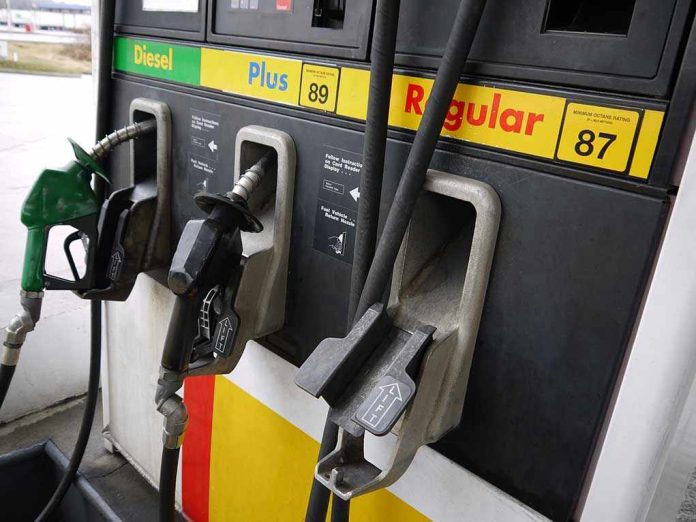
At home, this strategy intersects directly with the politics of gas prices and the principle that America should not depend on hostile suppliers for critical energy.[1][4][6] By capturing Venezuelan barrels under U.S. terms, the administration can claim to ease pressure on refiners and drivers without cutting sweetheart deals with regimes that still chant against Washington. That aligns with a conservative priority: use U.S. leverage to secure reliable supply, but keep negotiating power firmly in American hands rather than in OPEC meeting rooms.
Abroad, redirecting Venezuela away from Beijing, Moscow, Tehran, and Havana is as much a geopolitical prize as any short‑term price impact. Venezuela holds some of the world’s largest heavy crude reserves; if those barrels flow through contracts, banks, and technologies tied to the United States, then rival powers lose both influence and future revenue streams. That is why the conditions on exclusive U.S. partnerships matter. Critics will argue that Washington is overreaching and trampling Venezuelan sovereignty. Supporters will counter that after years of authoritarian plunder, tying access to basic standards of governance and alignment is not colonialism; it is common sense.
What additional sanctions relief “as soon as next week” really signals
Treasury Secretary Scott Bessent’s hint that additional sanctions could be lifted “as soon as next week” to facilitate oil sales is not a casual aside. It signals that the pilot framework—limited barrels, select traders, tight financial controls—is about to scale up. Specific moves might include expanded special licenses for more volumes, broader authorization of oilfield services, or clarifications that encourage banks and shippers to participate without fearing the next enforcement headline. Each adjustment lowers friction for compliant actors while preserving the threat of penalties for anyone tempted by off‑book deals.
The core test for Washington will be discipline. If every step of relief remains tethered to concrete conditions—on democratic reforms, on cutting ties to adversaries, on transparency of proceeds—then sanctions regain their original purpose: changing behavior, not making headlines. If, instead, short‑term price anxiety drives a quiet return to the old habit of tolerating corruption in exchange for cheap barrels, then this “selective rollback” will look like yet another reset that sacrificed leverage just when it mattered most. For now, the structure tilts toward leverage. Whether it stays that way depends on how seriously policymakers take their own conditions.
Sources:
Compliance Landscape in Venezuela Following Nicolás Maduro’s Removal from Power
Developments in US sanctions on Venezuela
Venezuela Sanctions Policy Changes Afoot
Venezuela: Navigating a New Era of Uncertainty
Venezuela-related Sanctions Press Release
Bessent signals Venezuela sanctions relief ‘as soon as next week’