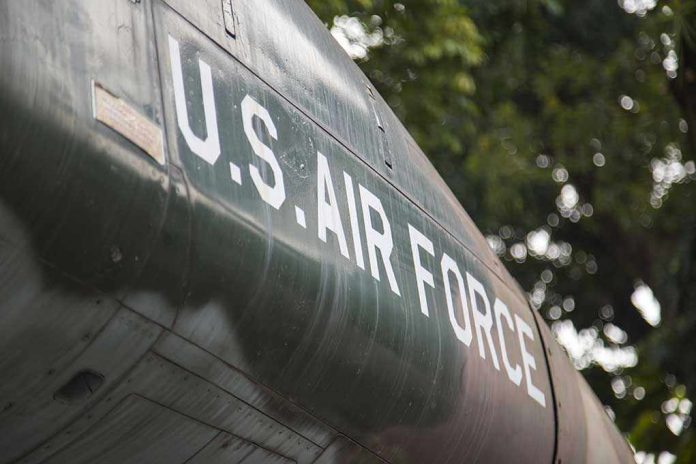
The B-52 Stratofortress is poised to become the first military aircraft in history to fly for 100 years, delivering a powerful message about American ingenuity and the wisdom of proven capabilities over flashy new toys.
Story Overview
- B-52J upgrade program transforms aging H-models with new engines, radar, and hypersonic weapons capability
- Rolls-Royce F130 engines will cut fuel consumption by 20-30% while extending unrefueled range significantly
- The aircraft will serve until the 2050s, making it a century-old design still defending America
- Upgrades cost billions versus $700+ billion for entirely new bomber fleets
The Century Bomber Revolution
The B-52J designation represents more than a simple upgrade—it symbolizes American pragmatism triumphing over Pentagon procurement excess. Originally designed in 1946 as a Cold War nuclear deterrent, the Stratofortress first flew on April 15, 1952, and entered service with the 93rd Bomb Wing on June 29, 1955. Now, 70 years later, this airframe continues proving that solid engineering beats flavor-of-the-month defense spending.
Boeing built 744 B-52s between 1952 and 1962, with 58 still active today under Air Force Global Strike Command. The J-model transformation replaces obsolete TF33 engines with modern Rolls-Royce F130s, installs advanced AESA radar systems, and integrates hypersonic weapons platforms. This isn’t restoration—it’s revolutionary modernization using a time-tested foundation.
Smart Spending in Dangerous Times
While Pentagon bureaucrats chase billion-dollar boondoggles, the B-52J demonstrates fiscal responsibility without compromising lethality. The upgrade program costs a fraction of developing new bombers while delivering enhanced capabilities that matter: longer range, reduced maintenance, and compatibility with tomorrow’s weapons. Each upgraded aircraft essentially costs $84 million equivalent—pocket change compared to modern military procurement disasters.
The F130 engines alone represent a quantum leap in efficiency and reliability. The current TF33 powerplants, prone to failures and fuel-hungry operations, will be replaced by engines that slash consumption while boosting performance. This means longer missions, fewer tanker requirements, and reduced logistical footprints—exactly what America needs for Pacific deterrence and global reach.
A Message to Military Leadership
The B-52J sends an unmistakable signal to Air Force leadership: proven platforms with smart upgrades often outperform untested alternatives. While the B-21 Raider consumes development dollars and faces inevitable teething problems, the Stratofortress continues flying combat missions with crew confidence built over decades. The five-person crew configuration—commander, pilot, navigators, and electronic warfare officer—represents institutional knowledge that can’t be replicated in simulators.
This longevity isn’t accidental. The B-52’s adaptability allowed it to evolve from high-altitude nuclear missions to low-level penetration, Vietnam-era Arc Light bombing, and modern precision strike operations. Each transformation validated the original design’s fundamental soundness while proving that American engineering, when done right the first time, delivers generational value.
Strategic Implications for National Defense
The B-52J program represents more than aircraft modernization—it’s a strategic philosophy emphasizing substance over style. While adversaries develop costly new platforms with unproven track records, America extends the service life of combat-tested systems with cutting-edge capabilities. This approach maximizes deterrence while minimizing risk, delivering immediate operational benefits rather than promises.
By 2030, the full B-52J fleet will bridge the gap between current threats and future challenges, potentially serving until 2050 or beyond. This timeline ensures continuous strategic bomber capability while new platforms like the B-21 mature and prove themselves. The message is clear: America doesn’t need to reinvent deterrence—just perfect it.
Sources:
Wikipedia – Boeing B-52 Stratofortress
STRATCOM – Another Decade of the B-52’s Enduring Legacy
US Air Force – B-52H Stratofortress Fact Sheet
Simple Flying – Long Range Bomber 100 Years Continuous Flying
Imperial War Museums – Why the B-52 is Outliving Newer Bombers