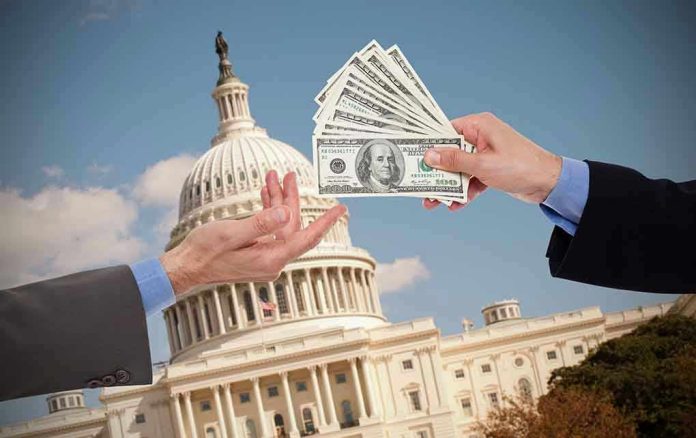
A new tax reform bill is poised to reshape the economic landscape, but critics argue it disproportionately benefits the wealthy at the expense of the poorest Americans.
Story Highlights
- The “One, Big, Beautiful Bill” aims to drive economic growth in 2026 through tax cuts and deregulation.
- Working-class Americans are promised wage increases, but distributional disparities spark debate.
- Independent analysis reveals significant tax relief for the top 1%, raising concerns about fairness.
- The bill is expected to reduce federal revenue by $570 billion in 2026, impacting fiscal sustainability.
Trump’s Tax Reform: A New Economic Era?
On July 4, 2025, President Trump signed the “One, Big, Beautiful Bill” into law, marking a pivotal moment for his administration’s economic strategy. The legislation combines tax cuts, relief provisions, and extensions of prior policies to stimulate growth and increase worker incomes. This approach builds upon Trump’s previous tax policies, integrating energy deregulation and tariff strategies to create a comprehensive economic package.
The administration projects significant benefits, including wage increases up to $7,200 per worker and the creation or protection of 7.2 million jobs, including 1.4 million in manufacturing. These projections, however, are met with skepticism, as the Institute on Taxation and Economic Policy (ITEP) highlights that the wealthiest Americans and foreign investors receive substantial tax benefits, raising questions about the bill’s fairness.
Winners and Losers: A Closer Look
While the administration claims the bill primarily benefits working-class Americans, ITEP’s analysis reveals a different story. The poorest 40% of Americans face average tax increases of $140 due to the non-extension of health care tax credits. In contrast, the wealthiest 1% receive net tax cuts $14 billion greater than the combined cuts for the bottom 80% of income earners. This redistribution of tax burdens raises concerns about the bill’s true impact on economic equality.
Middle-class Americans may see modest benefits, with the middle 20% receiving average tax cuts of $370. However, some states are expected to experience tax increases, further complicating the bill’s reception among this demographic. The targeted elimination of taxes on tipped income and overtime work aims to directly benefit lower-income workers, but the broader impact of tariffs could offset these gains.
Economic Growth or Fiscal Risk?
As the bill’s provisions take effect in 2026, the administration anticipates a 4.9% increase in real GDP over four years and a 1.2% higher average annual growth rate. However, the $570 billion reduction in federal revenue raises concerns about long-term fiscal sustainability. Ex-Treasury official Michael Faulkender argues the combination of tax cuts, low energy prices, and deregulation mirrors the successful economic formula from Trump’s first term, yet independent analysts urge caution.
Despite the administration’s optimistic projections, the bill’s impact on lower-income Americans and the overall distribution of tax benefits remain contentious points. As the nation watches closely, the true effects of the “One, Big, Beautiful Bill” will unfold, shaping the economic landscape for years to come.
Sources:
Fox Business: Ex-Treasury Official Says Trump’s Economic Policies Set to Pay Off This Year
IRS: One Big Beautiful Bill Provisions