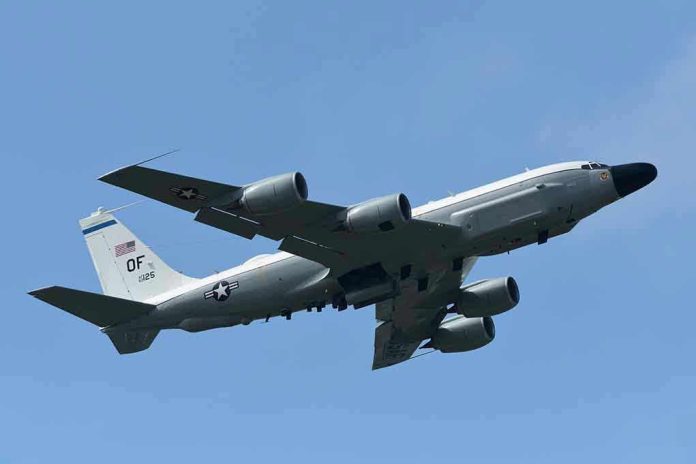
The U.S. Air Force’s readiness is under scrutiny as alarming deficiencies threaten national security.
Story Overview
- The USAF faces its greatest capacity and readiness crisis, with its smallest and least capable fleet in history.
- Aircraft availability rates have dropped to 54%, below combat mission readiness.
- Congress and the Trump administration are urged to boost funding and accelerate procurement.
- The aging fleet and slow modernization pose significant threats against adversaries like China.
USAF Capacity and Readiness Crisis
The U.S. Air Force, once the epitome of global air superiority, now faces a critical crisis in capacity and readiness. With a fleet that is the smallest in its 78-year history, the USAF’s aircraft availability rate has plummeted to a mere 54%. This lack of readiness undermines its deterrence capabilities against powerful adversaries like China. Over the past seven years, pilots have averaged fewer than two sorties weekly, falling below combat mission-ready thresholds.
The crisis has sparked a call to action for Congress and the Trump administration to increase funding and boost aircraft procurement. The current procurement plan for 2025 includes only 42 F-35s and 18 F-15EXs, which falls short of the requirements to maintain a ready and capable force. Divestitures are currently outpacing acquisitions, further weakening the USAF’s capacity to respond to global threats.
Historical Background
The roots of this crisis trace back over a decade, marked by chronic underfunding of operations and maintenance, parts, and flying hours. The fleet includes outdated platforms from the Cold War and Vietnam era, such as the B-52 and KC-135. These aging aircraft have seen a steady decline in availability rates, exacerbated by a shift in focus from peer competition to counterinsurgency post-Cold War.
In 2018, then-Secretary of Defense Jim Mattis set an unmet goal for 80% mission-capable rates for key aircraft, yet the F-35A’s rate plunged from 69% in 2021 to just 51.5% by 2024. This decline highlights the inadequacy of current efforts to modernize and maintain the fleet amidst rising threats from China and Russia.
Call for Action
Amid this crisis, the Air Force Association and the Mitchell Institute have underscored the urgent need for change. They recommend accelerating procurement to 72 F-35s, 24 F-15EXs, and 21 B-21s annually by 2029, while halting further divestitures. The Trump administration’s emphasis on “lethality” and deterrence aligns with these recommendations, yet action is needed to shift research and development funds to procurement and operations and maintenance.
This issue has garnered significant attention from military leaders and defense analysts who warn of dire consequences if unaddressed. The USAF’s current trajectory compromises its ability to respond effectively to peer conflicts, demanding immediate and strategic investment to restore its readiness and capacity for global operations.
The ramifications of this crisis are far-reaching, affecting airmen, military families, and defense contractors. The strain on personnel and resources highlights the need for a comprehensive approach to restore the USAF’s dominance. This situation serves as a wake-up call for policymakers to prioritize national security and ensure the USAF can meet its critical mission demands.
Sources:
USAF’s Capacity, Capability, and Readiness Crisis
Air Force Aircraft Readiness Plunges to New Low, Alarming Chief
Grounded by Red Ink: The Hidden Chokepoint in U.S. Air Force Readiness
Winning the Next War: Overcoming the U.S. Air Force’s Capacity, Capability, and Readiness Crisis