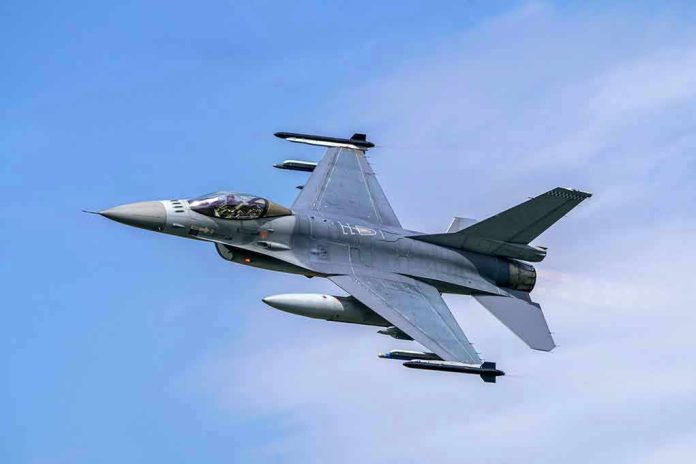
A U.S. Air Force Thunderbird F-16 fighter jet crashes in California’s Mojave Desert, leaving both a massive smoke plume and pressing questions about military aviation safety.
Story Overview
- An F-16 fighter jet from the Thunderbirds crashed in the Mojave Desert.
- The pilot successfully ejected before the crash.
- A massive plume of black smoke was visible at the crash site.
- Investigations are ongoing to determine the cause of the crash.
The Incident Unveiled
The crash of an F-16 fighter jet, part of the United States Air Force’s Thunderbirds demonstration team, occurred in California’s Mojave Desert, sending a thick plume of black smoke into the sky. The incident happened recently, and while it resulted in the total loss of the aircraft, the pilot miraculously survived by ejecting before impact. The Thunderbirds, known for their precision flying, now face scrutiny as investigations aim to uncover the underlying causes of this accident.
A U.S. Air Force F-16C Fighting Falcon from the Thunderbirds demonstration team crashed near Trona Airport — in the desert south of Death Valley — during a training mission; the pilot ejected safely and was hospitalized with minor injuries.https://t.co/RWRN2dnyk1
— Mark Bowron (@MarkBowron420) December 4, 2025
The Mojave Desert, with its sprawling open spaces and existing military infrastructure, has long been a hub for aviation training and testing. However, the remoteness of the region presents challenges for rapid response and investigation. Such incidents, though rare, underscore the inherent risks involved in military aviation operations, even in controlled environments. The sight of the massive smoke plume added a dramatic visual element to the incident, drawing public and media attention.
What Led to the Crash?
As the investigation unfolds, several factors are under scrutiny. Mechanical failure, pilot error, adverse weather conditions, and maintenance oversight are potential contributors being examined. The Air Force must determine the cause to implement necessary safety measures. The investigation’s outcome will impact the Thunderbirds’ operations, possibly leading to temporary grounding or operational changes to ensure future safety. This crash, while not resulting in loss of life, represents a significant financial and operational setback.
The Thunderbirds have a storied history of demonstrating the capabilities of military aviation to the public. Their performances are a testament to precision and skill, making this crash a poignant reminder of the risks involved. The pilot’s successful ejection is a testament to the training and technology that prioritizes human life even in dire situations. However, it also raises questions about what went wrong to necessitate such an emergency maneuver.
Implications and Future Considerations
The immediate loss of an F-16 is a financial blow, but the broader implications concern military aviation safety and public perception. Investigations may lead to changes in maintenance protocols, pilot training, and operational guidelines. Such adjustments aim to prevent future incidents, enhancing safety for pilots and preserving the Thunderbirds’ reputation. The Air Force’s transparency and responsiveness will be crucial in maintaining public confidence in military aviation.
US military plane goes down in massive plume of black smoke in California desert https://t.co/YwPYQVfLO1 pic.twitter.com/TGGyYvijaP
— New York Post (@nypost) December 3, 2025
For the affected parties, including the pilot, their family, and the Thunderbirds team, the crash is a stark reminder of the occupational hazards inherent in military service. The local communities in the Mojave Desert also face the immediate aftermath of the crash, including potential environmental impacts from the wreckage and smoke. As investigations continue, the military aviation community will closely monitor developments, seeking lessons to improve safety and operational effectiveness.