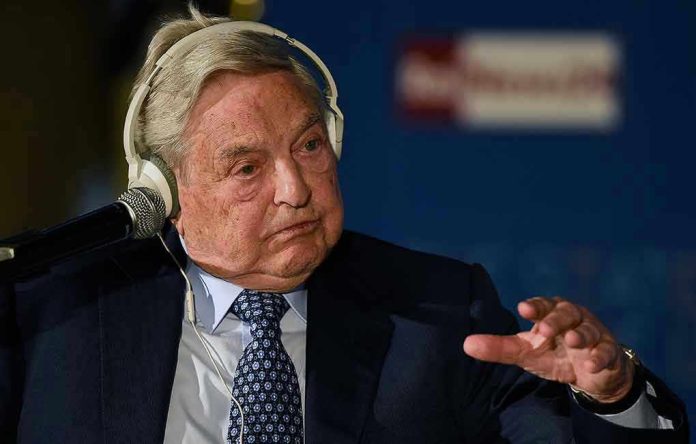
The decision by a Soros-backed district attorney not to pursue the death penalty against a machete-wielding illegal immigrant accused of a beheading has sparked a fiery debate on justice and politics.
Story Snapshot
- A Soros-funded DA decided against the death penalty for a violent crime involving an illegal immigrant.
- The decision has fueled controversy, especially among pro-capital punishment advocates.
- Critics argue the DA’s ideological stance undermines justice in severe cases.
- The case highlights tensions between prosecutorial discretion and political influence.
Prosecutorial Discretion and Public Outcry
In a case that has riveted national attention, the district attorney, financially backed by billionaire George Soros, decided not to pursue the death penalty against an illegal immigrant accused of a gruesome crime. This decision has drawn sharp criticism, particularly from those who support capital punishment and view the crime’s severity as justifying the harshest penalty under the law. The criticism is rooted in the belief that the DA’s decision is driven by ideological opposition rather than by the merits of the case.
Soros-backed DA ditches death penalty against machete-wielding illegal immigrant in beheading case https://t.co/JxRqhofG34 via @BIZPACReview
Illegal Alien…I fixed it for you.— Nedra Waters 🇺🇸 (@NedraWater101) December 1, 2025
The accused, an undocumented immigrant, allegedly used a machete in a crime described as a beheading. Critics argue that the DA’s decision sets a dangerous precedent, in which prosecutorial discretion is perceived as politically motivated rather than grounded in justice and societal protection. The involvement of Soros-backed funding in the DA’s election campaign has only added fuel to the fire, prompting discussions on the role of major donors in shaping criminal justice policies.
Historical Context and Legal Precedents
George Soros’s funding strategy for progressive prosecutors began in 2015, with an explicit aim to elect candidates who oppose the death penalty and other traditional prosecutorial stances. This movement saw a significant expansion as Soros and like-minded donors invested in campaigns across the United States. The model has become controversial, with arguments centering on whether such financial backing influences prosecutorial discretion to an extent that compromises justice.
READ NOW: Soros DA Ditches Death Penalty Against Machete-Wielding Illegal Immigrant In Beheading Case — Democratic District Attorney John Creuzot of Dallas County is not seeking the death penalty against an illegal immigrant charged with…https://t.co/FmWsjOhJz0
— Top News by CPAC (@TopNewsbyCPAC) December 1, 2025
Impact and Implications
The decision not to seek the death penalty has immediate and long-term implications. In the short term, the defendant will serve life imprisonment without parole, a sentence reportedly supported by the victim’s family. However, the broader impact is that the case becomes a touchstone in the debate over capital punishment and the extent of prosecutorial discretion. The decision has intensified political pressure on the district attorney and similar Soros-backed prosecutors, igniting discussions on whether ideological beliefs should influence prosecutorial decisions.
The implications could include a shift in how future prosecutorial decisions are made, particularly in capital cases. The case underscores the ongoing legal and political battles over the role of prosecutorial discretion, and whether it should be influenced by broader ethical and jurisprudential considerations or strictly by case facts. It also feeds into the larger narrative of how financial backing from donors like Soros is reshaping the criminal justice landscape in America.