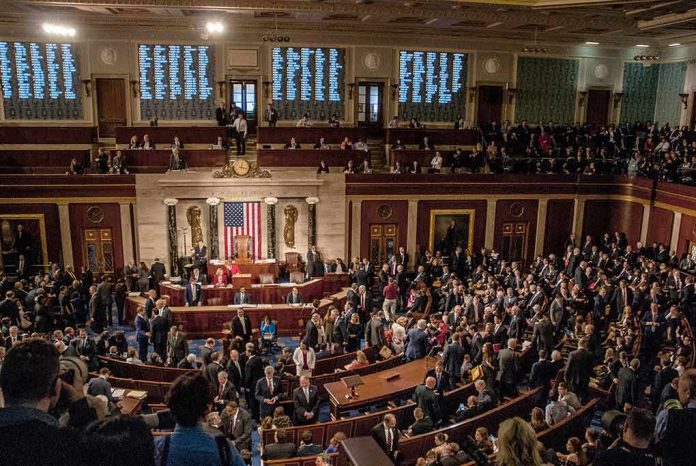
Congress voted to curb lawmaker stock trading, but the bill’s fine print left just enough loopholes to turn a reform vote into a fight over credibility.
Quick Take
- The House passed the Stop Insider Trading Act by 232 to 198, with 13 Democrats joining Republicans
- The bill barred new purchases of individual publicly traded stocks by members of Congress, spouses, and dependent children
- It still let lawmakers keep stocks they already owned, which fueled the claim that this was not a full ban
- Republicans attached federal voter identification language, and that helped drive nearly all Democratic opposition
A Reform Vote That Was Bigger Than the Headline
The House did something Congress often avoids: it voted on an ethics issue that most Americans already understand. The bill aimed to stop members of Congress from buying new individual stocks while in office, and the vote drew bipartisan support, even if not enough to erase the partisan split around it.
The strongest defense of the bill is simple. Public polling has long shown overwhelming support for restricting congressional stock trading, including broad backing from Republicans and Democrats alike. That matters because it means the House was not chasing a fringe idea. It was responding to a public disgust that has grown louder every year.
What the Bill Actually Changed
The measure went after future buying, not past ownership. Reports say it barred lawmakers, spouses, and dependent children from purchasing new individual stocks, while allowing them to keep holdings they already had before the rule took effect. That is the heart of the debate. Supporters called it a crackdown. Critics called it a half-step.
The bill also carried enforcement teeth. If a covered person broke the rule, the penalty could be $2,000 or 10 percent of the trade value, whichever was greater, plus the profit from the transaction. On paper, that is real discipline. In practice, it still leaves the larger question untouched: why should lawmakers be allowed to keep owning the very assets they regulate?
Why Democrats Rejected It
Most Democrats did not vote no because they love congressional stock trading. They voted no because the package was bundled with voter identification language, turning one ethics bill into a larger election fight. Once that rider appeared, the vote stopped being a clean test of stock-trading reform and became a test of whether Democrats would accept a bundled political bargain.
The Swamp Protects Its Own: 198 House Democrats Reject Congressional Stock-Trading Crackdown https://t.co/iRcfQo57Hy
— David Haneman (@dmhaneman) July 23, 2026
That is where the politics get messy. Republicans could say Democrats opposed a stock-trading ban. Democrats could say the bill was incomplete and tainted by the voter-ID rider. Both claims carry some truth, but they do not mean the same thing. The first describes the vote. The second describes the policy design.
The Real Weakness: It Was Not a Full Ban
The most damaging critique is not rhetorical. It is structural. Congress has seen stronger proposals that would require divestment or broad ownership bans, including bills that force members and spouses to sell holdings within a fixed period. Compared with those plans, the House bill looked narrower and easier to defend as compromise rather than as a full cleanup of the conflict-of-interest problem.
That gap explains why the same vote can be sold two ways. To supporters, it was a meaningful first step. To critics, it was a carefully limited restriction that preserved the core benefit many lawmakers enjoy: the ability to keep stocks already in their portfolios. In Washington, the difference between “step” and “solution” often decides whether a reform survives or stalls.
Why This Fight Keeps Coming Back
This episode fits a familiar pattern. Public anger is easy to measure, but legislative agreement on the exact fix is hard to hold together. Some members want a full ban. Others want blind trusts. Others want divestment deadlines. Once those details enter the room, unity starts to crack, and partisan branding rushes in to fill the gap.
That is why this vote mattered beyond the tally. It showed that Congress can still rally around the language of reform. It also showed how quickly a reform can lose its moral force when lawmakers preserve old holdings, attach unrelated riders, and then ask the public to treat compromise as victory.
Sources:
noticias.foxnews.com, facebook.com, nytimes.com, washingtonexaminer.com, youtube.com, publicconsultation.org, en.bloomingbit.io, thehill.com, congress.gov, pbs.org, merkley.senate.gov, magaziner.house.gov