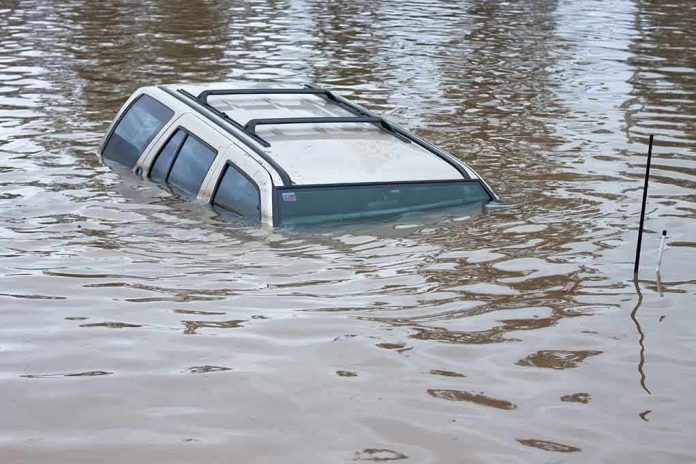
The most powerful force in Washington this week is not politics, it is a wall of water testing how seriously we take warnings, preparedness, and common sense.
Story Snapshot
- Up to 100,000 people in western Washington floodplains were told, in plain language, to “GO NOW” as rivers pushed toward historic crests.
- Two back-to-back atmospheric rivers turned familiar valleys—Skagit, Nooksack, Yakima—into potential disaster corridors.
- Governor Bob Ferguson declared a statewide emergency and moved to unlock fast-tracked federal disaster aid.
- Swift-water rescues, sandbag walls, and midnight evacuations revealed how thin the line is between routine winter rain and “catastrophic” flooding.
When Routine Rain Turns Into “Catastrophic” Flood
Western Washington residents know rain the way Midwesterners know cornfields. Still, this week’s storm did something different: it stacked two atmospheric rivers back-to-back on already soaked ground, pushing rivers like the Skagit toward levels forecasters called “an almost unthinkable number.” Hydrologists warned that the usual defenses—levees, sandbags, floodwalls—could be overtopped, and officials shifted from “be prepared” to “go now” with unusual urgency.
Skagit Valley, usually postcard-pretty with its farm fields and small towns, became the epicenter of that warning. County officials told as many as 100,000 floodplain residents that staying put was no longer a show of grit but a gamble with their lives. Mount Vernon’s mayor, Peter Donovan, described a flood “we haven’t seen before” and spoke bluntly about “real” catastrophic potential, urging people to get to higher ground while roads were still open.
Inside the Emergency: Orders, Rescues, and a State on Edge
As rivers surged on December 9 and 10, Skagit County escalated from high-water alerts to mandatory evacuation orders for parts of Mount Vernon and Sedro-Woolley, telling floodplain residents to leave immediately. At the same time, the Nooksack near Ferndale, the Green and White near Auburn, and the Yakima near Benton City and West Richland all flirted with or approached major flood stage, turning a regional problem into a statewide emergency.
Governor Bob Ferguson responded by signing a statewide emergency declaration and signaling that he would seek an expedited federal emergency declaration to bring in FEMA support. That step unlocked broader coordination—state emergency management, swift-water rescue teams, and mutual aid from other parts of Washington, including a Spokane rescue unit sent west to help in Puget Sound floodwaters. ABC News cameras, meanwhile, captured live rescues of people caught by fast-rising water after they waited too long to leave.
What This Flood Reveals About Risk, Responsibility, and Reality
This event did more than soak basements; it exposed the long-running tension between living in scenic river valleys and respecting the rivers that shaped them. Skagit Valley agriculture, industrial parks along the Green River, and growing suburbs in low-lying corridors have all benefited from levees and engineering that tame rivers in normal years. But when forecasters warn of a “historic” flood, those choices come due, and the most conservative principle in the room is simple: protect life first, argue over land use later.
Evacuations ordered amid threat of 'catastrophic' flooding in Washington state https://t.co/oZYsQoe6AQ
— Chris Smith (@jchrissmith0007) December 11, 2025
From a common-sense standpoint, the message “GO NOW” reflects an uncomfortable truth many would rather ignore: once water is at your doorstep, you are no longer making a decision, the river is. American conservative values often emphasize personal responsibility, and this is where responsibility cuts both ways. Government must issue clear, early, fact-based warnings and avoid sensationalism; residents must heed those warnings, not assume that past luck or familiarity with the landscape guarantees future safety.
After the Crest: Hard Questions About Building, Spending, and Preparedness
Once the water recedes, the fight shifts from sandbags to budgets. Historic flooding of this scale will likely bring calls for stronger levees, altered dam operations on rivers like the Skagit, and more investment in mitigation projects that can reduce the need for future mass evacuations. Those discussions will pit cost against risk: Should taxpayers fund major upgrades for repeatedly flooded areas, or should policy nudge homes, businesses, and even some farmland out of the highest-risk zones?
From a fiscally conservative lens, the most responsible path will be the one that reduces repeated losses and repeated federal bailouts. That may mean tougher building rules in floodplains, targeted buyouts where rebuilding makes little sense, and smarter use of both hard infrastructure and restored floodplain areas. The atmospheric rivers hitting Washington this week are a reminder that while weather cannot be negotiated, exposure and preparedness can—and that ignoring hard truths about risk is the most expensive option of all.
Sources:
“Catastrophic” flooding forces emergency rescues in the Pacific Northwest